Trump Appointed Judge Ends Proud Boys Jan. 6 Case
Trump appointed judge permanently ends Proud – A Trump appointed judge permanently ends the Proud Boys’ January 6 prosecution after ruling that constitutional principles left him no alternative. Judge Timothy Kelly of the U.S. District Court issued his decision on Friday, acknowledging that legal doctrine compelled him to accept the Justice Department’s request to close the case permanently. The court granted the government’s motion to dismiss with prejudice, preventing any future prosecution of Ethan Nordean, Joseph Biggs, Zachary Rehl, and Dominic Pezzola. This final ruling follows a previous appeals court decision that had overturned the defendants’ convictions.
Constitutional Limits on Judicial Power
In his comprehensive seven-page opinion, Judge Kelly explained that the separation of powers doctrine places charging authority firmly within the executive branch. The judge determined he could not legally force the Justice Department to continue a prosecution that federal officials had decided to abandon. Kelly stressed that his acceptance of the dismissal did not reflect personal endorsement of the administration’s position.
Because the decisions to issue the Executive Order and to abandon this prosecution—even after the Government secured convictions for serious crimes relating to the attack on the Capitol on January 6—are solely the Executive’s, no one should mistake the Court’s granting of the Government’s motion for its agreement with those decisions.
The legal foundation of Kelly’s ruling rested on the principle that charging decisions belong primarily to presidential and departmental authority. Judges cannot dismiss a government’s motion simply because they personally disagree with the reasoning. Combined with the appeals court’s earlier vacatur of the convictions and prosecutors’ broad discretion, Kelly concluded he lacked the authority to maintain the case.
Defendants’ Convictions and the Executive Order
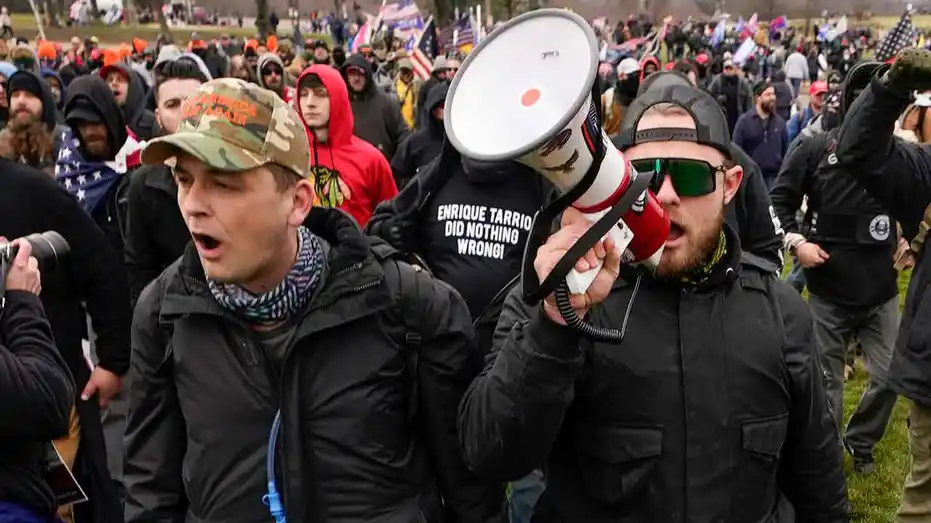
Dominic Pezzola’s conduct during the Capitol riot drew particular attention. He was convicted of assaulting police officers, robbery, and destroying government property. Evidence showed Pezzola took a Capitol Police riot shield and smashed a Capitol window, creating what prosecutors called the first breach that allowed hundreds of rioters to enter. Though acquitted of seditious conspiracy, he faced multiple felony convictions.
Nordean, Biggs, and Rehl were convicted of seditious conspiracy alongside additional felonies tied to the January 6 attack. These included conspiracy to obstruct Congress’s certification of the 2020 presidential election, obstruction of law enforcement during civil disorder, and destruction of government property.
The Justice Department filed its motion in April to vacate convictions and dismiss the case against all four men. Government attorneys argued this action served “in the interests of justice” after President Donald Trump’s January 20, 2025, executive order. That order commuted the sentences of the four Proud Boys members and granted full pardons to former Chairman Enrique Tarrio plus hundreds of other January 6 defendants.
There is little mystery about why the Government is moving to dismiss this case, or whether dismissal is in fact what the Executive seeks. President Trump’s views about the prosecution of those who attacked the U.S. Capitol on January 6—whether those views are based on fact or fiction—are well known, as is his intention to extend clemency to them.
A Message for the Future
While bound by legal constraints, Kelly strongly criticized the rioters’ behavior. He described their actions as an assault on the American people, Congress, and the constitutional process for peaceful transfer of power.
Moving forward, if this Nation’s experiment in self-government is to last another 250 years, the American people—no matter their partisan preferences—will have to act together to preserve, protect and defend that miracle through our constitutional framework.
Enrique Tarrio,