State Department Welcomes Keiko Fujimori as Peru’s President-Elect Amid Close Election Results
State Department congratulates Keiko Fujimori as Peru – The U.S. Department of State extended its congratulations to Keiko Fujimori on Monday, recognizing her as Peru’s newly elected president following a highly contested runoff election. The victory, secured by a narrow margin, has been hailed as a pivotal moment in the country’s political landscape, with Washington expressing its anticipation for working with Fujimori’s administration on mutual goals. This endorsement underscores the growing alignment between the United States and Peru’s new leadership, despite historical complexities in their relationship.
Peru’s Tense Electoral Showdown
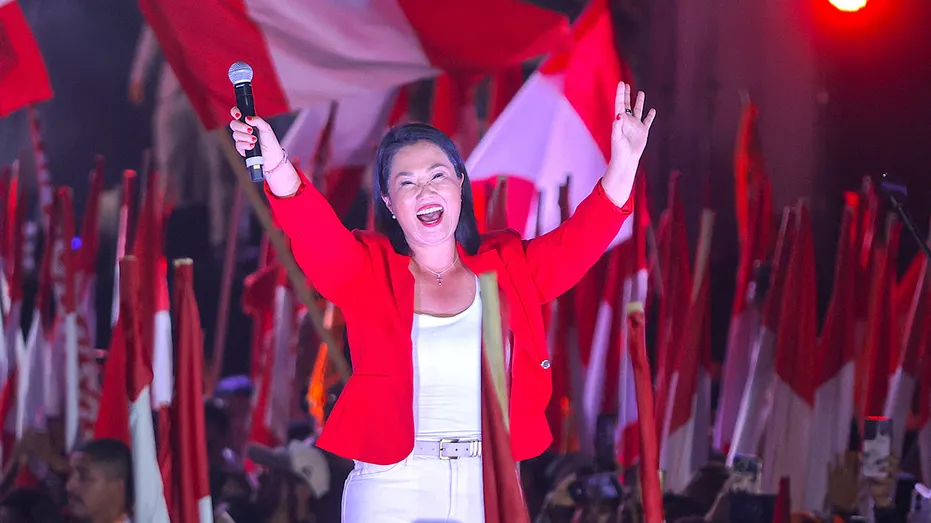
Keiko Fujimori’s triumph came after a runoff that left the outcome hanging by a slim thread. According to the National Office of Electoral Processes (ONPE), she narrowly surpassed her leftist rival, Roberto Sánchez, with 50.1% of the votes. This margin of victory, less than 50,000 votes out of approximately 18 million ballots cast, highlights the intense political polarization that has defined recent years in Peru. The results have been a culmination of a decade marked by frequent leadership changes, with the nation having seen nine presidents since 2013.
Fujimori’s win is particularly significant as it marks her fourth attempt at the presidency and positions her as the first woman to hold the title of president-elect in Peru. Her campaign focused on restoring order, addressing crime, and safeguarding the nation’s free-market economy, themes that resonated with voters amid a surge in violent incidents and economic uncertainty. This outcome also signals a shift in the country’s political direction, with the Fujimori family’s legacy returning to the highest office after a long absence.
Strategic Implications for U.S.-China Relations
Washington’s endorsement of Fujimori’s leadership comes at a critical juncture in Latin America, where the U.S. seeks to counter the expanding influence of China. The Trump administration has emphasized the importance of strengthening ties with pro-market leaders, and Fujimori’s victory is seen as a positive step in that strategy. Her administration’s commitment to security cooperation and economic stability aligns with American interests, particularly as Beijing continues to solidify its presence in the region.
One of the most notable symbols of China’s growing foothold in Peru is the recently completed Chancay deepwater port, a $1.3 billion project that serves as a critical logistics hub along the Pacific coast. This infrastructure development has raised concerns about Peru’s sovereignty, with U.S. officials warning that increased Chinese investment could reshape the nation’s economic and political landscape. Fujimori’s administration is expected to navigate these challenges, balancing partnerships with both the U.S. and China while prioritizing domestic priorities.
Keiko Fujimori’s political journey has been shaped by her father, Alberto Fujimori, who once commanded U.S. support for his anti-communist policies and economic reforms in the 1990s. However, his tenure also saw allegations of human rights abuses and the erosion of democratic institutions, leading to a shift in American sentiment. Fujimori has since worked to redefine her family’s political brand, transforming it into a modern, conservative movement focused on law and order.
Reactions and Future Prospects
Despite her historical ties to the Fujimori family, Keiko Fujimori has positioned herself as a distinct figure, campaigning on a platform of economic protectionism and robust security measures. Her opponent, Roberto Sánchez, had appealed to rural communities with promises to address economic disparities, but Fujimori’s appeal to urban voters and her emphasis on tackling organized crime proved decisive.
As the final authority on election matters, the National Jury of Elections (JNE) has yet to officially proclaim Fujimori as president, leaving room for potential legal challenges. However, the ONPE’s announcement has already set the stage for her inauguration, with the U.S. looking forward to deepening collaboration under her leadership. The State Department’s statement, which included remarks from the Trump administration, highlighted shared priorities such as security cooperation and fostering trade and investment in the region.
Fujimori’s election also carries symbolic weight, representing a return of her family’s political influence after years of absence. This moment has been viewed as a wake-up call for nations in Latin America, where conservative leaders are increasingly vying for power in response to leftist policies and rising Chinese investments. The U.S. has framed this development as a chance to reinforce its strategic partnerships and counter the spread of authoritarian tendencies in the region.
In the broader context of global politics, Fujimori’s victory is seen as a reflection of shifting alliances and the growing importance of economic stability in Latin American nations. Her administration will face the task of addressing Peru’s internal challenges while navigating the complex interplay of U.S. and Chinese interests. The State Department’s support signals confidence in her ability to steer the country toward a more predictable and prosperous future.
Meanwhile, the U.S. and China are set to meet in Peru on Saturday, an event that is expected to draw attention to the country’s strategic significance in the region. The visit comes at a time when both nations are vying for influence, and Fujimori’s leadership may play a key role in shaping the dialogue. Her election is a reminder of the delicate balance between domestic priorities and international diplomacy, as Peru continues to chart its course in a rapidly evolving geopolitical environment.
As the nation prepares for a new era, Fujimori’s administration will need to address pressing issues such as crime, corruption, and economic inequality. The success of her campaign suggests that Peruvians are eager for a leader who can deliver tangible results and restore public confidence in governance. The U.S. has expressed optimism about working with her, but the challenges ahead will test the strength of their partnership and Fujimori’s ability to unite a divided electorate.
“The United States congratulates President-Elect Keiko Fujimori of Peru on her important electoral victory,” the State Department said. “The Trump Administration looks forward to deepening collaboration with the Fujimori Administration to advance security cooperation and to strengthen bilateral cooperation on investment and trade in our region.”
The path to presidency was anything but straightforward for Fujimori, who faced scrutiny over her past as a former leader and her family’s political history. Nevertheless, her campaign’s focus on security and economic reform has garnered widespread support, reflecting the public’s desire for stability. As Peru moves forward, the nation’s leaders will need to navigate both domestic and international challenges, ensuring that the electoral process serves as a foundation for lasting progress.
In summary, Keiko Fujimori’s narrow victory marks a turning point in Peru’s political trajectory. It has not only reinvigorated her family’s legacy but also positioned her as a key player in the region’s evolving dynamics. The U.S. has welcomed this development, signaling its intent to work closely with her administration as it seeks to solidify its position in Latin America’s political landscape.