A Sophisticated Underground Tunnel Uncovered in Tijuana May Facilitate Cross-Border Drug Smuggling
Hidden tunnel discovered in Tijuana may have – Authorities in Mexico have recently discovered an advanced underground tunnel close to the U.S.-Mexico border, potentially serving as a smuggling route for cross-border trafficking activities. The tunnel, located in the Nueva Tijuana neighborhood of Tijuana, Baja California, was revealed following the execution of a search warrant by agents from Mexico’s Attorney General’s Office (FGR). The operation, coordinated with the country’s Security Cabinet, uncovered a network of operational components, including lighting systems, ventilation ducts, and an electrically powered transport mechanism, suggesting it was designed to move goods between the two nations.
Tunnel Discovery Details
The tunnel spans approximately 265 meters, or 870 feet, and extends about 6.3 meters, or 21 feet, below the surface. Investigators reported that it was equipped with reinforced walls and a sophisticated infrastructure to support continuous operations. The FGR’s findings indicate that the tunnel might connect to a street in San Diego, though the exact location remains undisclosed. The discovery highlights the evolving tactics of criminal groups operating along the border, leveraging subterranean pathways to evade detection.
According to the FGR, the tunnel’s design includes a sliding mechanism that allows items to be transported in both directions. This infrastructure, combined with the presence of cell phones and documents, points to a well-organized system for illicit trade. Mexican officials emphasized that the property likely functioned as a central hub for storing, processing, and distributing firearms, explosives, and narcotics. The operation’s scale suggests a coordinated effort to maintain a discreet smuggling network.
Connecting the Dots: U.S. Side of the Tunnel
Meanwhile, U.S. authorities have also been investigating a parallel tunnel system linking Tijuana to San Diego. Federal prosecutors in San Diego announced charges against four individuals accused of orchestrating the movement of over a ton of cocaine through this subterranean route. The U.S. tunnel, which is about 1,933 feet long and 55 feet deep, features reinforced walls, electrical wiring, and rail systems, indicating a high level of engineering and planning. Agents discovered a concealed exit beneath the floor of a storage room in a “Buy 4 Less” storefront in Otay Mesa, underscoring the tunnel’s role in smuggling operations.
The FGR’s investigation, which began months of surveillance in late 2025, culminated in a major operation on May 29. The seizure of 1,029 kilograms—approximately 2,269 pounds—of suspected cocaine, valued at around $45 million, has been described as a significant disruption to the Jalisco New Generation Cartel (JNGC), one of Mexico’s most influential criminal organizations. The U.S. side of the tunnel, while not yet fully confirmed, is believed to have been used to transport narcotics into the country, with federal investigators noting that the discovery dealt a major blow to smuggling efforts.
RASHIDA TLAIB BECOMES LONE HOUSE LAWMAKER OPPOSING CRACKING DOWN ON MEXICAN CARTELS
As the tunnel’s significance becomes apparent, political tensions are emerging. Representative Rashida Tlaib has emerged as the sole House lawmaker opposing efforts to intensify crackdowns on Mexican drug cartels, highlighting the complex relationship between U.S. and Mexican authorities. Her stance reflects broader debates about border security strategies and the role of international collaboration in combating transnational crime.
The tunnel’s discovery has sparked discussions about the efficiency of underground smuggling routes. While the U.S. side remains unconfirmed, the dual operations suggest a well-synchronized effort between cartels on both sides of the border. The presence of ammunition and suspected methamphetamine at the Tijuana site indicates that the tunnel may have been used for multiple purposes, including the distribution of weapons and narcotics.
FEDS LIKELY EYEING ‘COVER-UPS’ TO BUST MEXICAN CARTELS ALONG BORDER: FORMER DEA AGENT
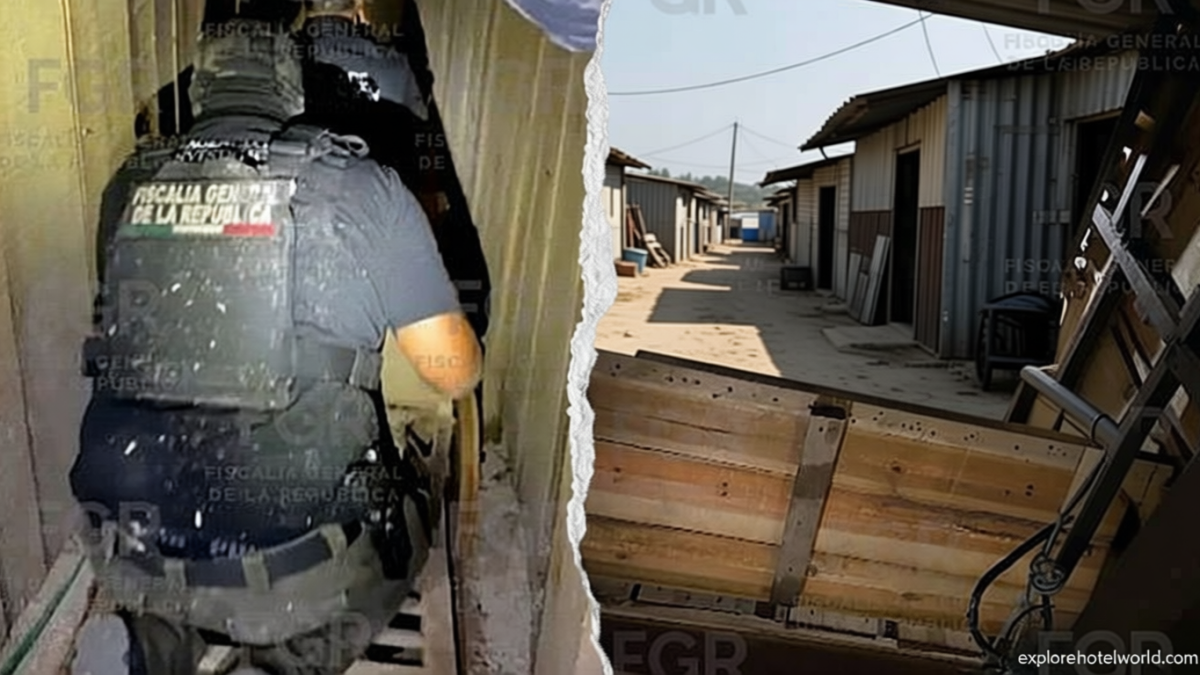
Photos released by the FGR depict agents navigating the underground passage, along with access points and evidence collected during the operation. These visuals provide insight into the tunnel’s complexity, with ventilation systems and other technical features emphasizing its operational readiness. A former DEA agent has suggested that U.S. authorities may be targeting “cover-ups” to dismantle smuggling networks, a strategy that could involve both physical evidence and digital records.
The evidence gathered, including documents and seized items, has been transferred to federal prosecutors in Baja California for further analysis. This transfer ensures that the investigation continues, with the potential to uncover more details about the tunnel’s use and the individuals involved. The coordinated actions between Mexican and U.S. agencies demonstrate the growing emphasis on cross-border cooperation in addressing drug trafficking and organized crime.
BORDER AGENTS UNCOVER RPG LAUNCHER, CACHE OF RIFLES HIDDEN IN VEHICLE HEADING TO MEXICO
During the operation, agents also recovered a variety of weapons and ammunition, indicating the tunnel’s dual role in both drug and arms trafficking. The presence of these items suggests that the smuggling network was not limited to narcotics but extended to other forms of contraband. This finding aligns with reports of increased activity in border regions, where cartels have been expanding their operations through innovative methods.
The FGR’s findings also point to the tunnel’s strategic location, which allows for rapid movement of goods and personnel. The depth and length of the tunnel make it difficult to detect, providing a significant advantage to traffickers. However, the recent operation has exposed its existence, marking a turning point in the fight against cross-border smuggling. Officials have described the discovery as a major setback for criminal organizations that rely on such routes to bypass traditional checkpoints.
QUOTES FROM AUTHORITIES
“For these defendants, it wasn’t a light at the end of the tunnel. It was lights and sirens,” said U.S. Attorney Adam Gordon of the Southern District of California. This quote captures the urgency of the operation and the consequences faced by those involved in the smuggling network.
The ongoing investigation has raised questions about the broader implications for border security. With tunnels like this, traffickers can bypass surveillance and customs controls, making it essential for authorities to adapt their strategies. The dual discovery—on both the Mexican and U.S. sides—suggests a coordinated effort to maintain a hidden supply chain. As the investigation progresses, it may reveal new insights into how cartels are exploiting the border for profit and influence.
The case underscores the challenges of monitoring illicit activities in border regions. While the tunnel’s exact purpose and full extent remain under scrutiny, its sophisticated design and the scale of the operation highlight the growing threat posed by cross-border smuggling. The combined efforts of Mexican and U.S. authorities represent a critical step in disrupting these networks, but the battle against organized crime is far from over. The next phase of the investigation will focus on tracing the tunnel’s connections and identifying any remaining hidden passages or operational bases.