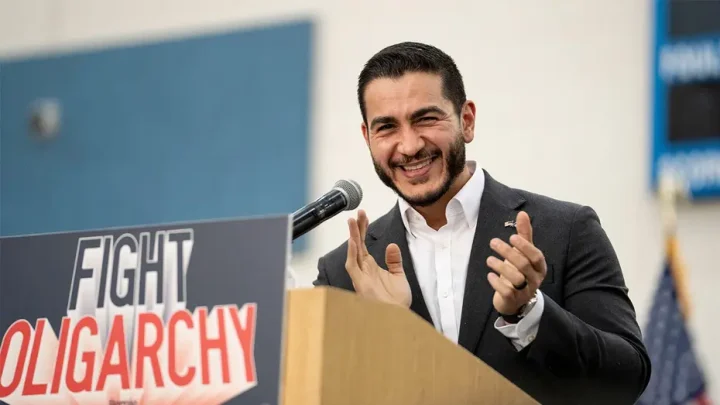
Dem Colorado gubernatorial nominee balks at socialist Melat Kiros’ response to bombing of pro-Israel rally
Dem Colorado gubernatorial nominee balks at socialist – Phil Weiser, the Democratic nominee for Colorado governor and current attorney general, raised concerns on Wednesday about the response of socialist candidate Melat Kiros to the firebombing of a pro-Israel rally in Boulder that occurred last year. The incident, which claimed one life and injured multiple others, sparked a heated debate over whether the attack was driven by antisemitic motives. Weiser, who recently defeated Sen. Michael Bennet in the Democratic primary, emphasized that the perpetrator, Mohamed Sabry Soliman, had been formally convicted of hate crime charges, including the murder of Karen Diamond, an 82-year-old attendee. This conviction, he argued, should settle the matter, yet Kiros’s reluctance to categorize the event as antisemitic has drawn criticism from some within the party.
Conflicting Perspectives on the Attack
During a recent interview with 9News, Kiros hesitated when asked if the firebombing of the pro-Israel rally could be classified as antisemitic. She acknowledged the attack’s severity but focused on the broader context of the individuals targeted. “All I know is that he went and attacked innocent people because of what they might have believed,” she said, adding that the beliefs of the attendees were unclear. Kiros noted that many at the rally were simply seeking to bring back those kidnapped during the October 7 conflict in Gaza. “That’s not a political statement in and of itself,” she explained, highlighting the tension between criticizing Israel and accusing the attack of being antisemitic.
“I don’t know what was in the heart of the perpetrator,” Kiros stated. “All I know is that he went and attacked innocent people because of what they might have believed, and I don’t even know what the people that were at that protest believed, too. In fact, most of them were probably just there to, you know, ask that the people who were kidnapped during October 7 be returned home to their families.”
While Kiros argued that the attack’s classification depended on understanding the victims’ beliefs, Weiser contended that the judicial system had already established its verdict. “We cannot look at that murder and say anything else happened than a hate crime,” he told 9News. “And so, if someone isn’t going to acknowledge that, I am concerned about that, because this was tried. Now we have a conviction. Our judicial system is set up to make a judgment, and the judgment here was it was a hate crime.”
Political Rhetoric and the Antisemitism Debate
Weiser’s comments were framed as a critique of Kiros’s approach to the incident. He drew a parallel between the current debate and the activism of groups like Black Lives Matter, suggesting that the discussion over antisemitism versus anti-Zionism is a political tool. “This is a point you hear a lot in the context of Black Lives Matter,” he said. “Now we’re talking Jewish Lives Matter, and for a lot of people this may not have been as clear a conversation, but let me tell you what it means. Black Lives Matter, period. Black Lives Matter. Elijah McClain’s life mattered, period. You don’t put a comma. Jewish lives matter. Karen Diamond’s life mattered. You don’t put a comma, an ‘and’ or a ‘but’ — period. That’s the message.”
Kiros, however, maintained that the attack should not be reduced to a single label. She argued that the political debate over whether the act was antisemitic or anti-Zionist is valid, emphasizing the importance of distinguishing between ideological criticism and hate-driven violence. “Regardless of what the perpetrator had in mind when he took those lives, it matters less to me than our responsibility to ensure people understand that even in the face of disagreements, violence is not the answer,” she said. This stance has positioned her as a voice for nuanced discourse within the Democratic Party, where the line between criticism of Israel and antisemitism is often contested.
Broader Implications for the Democratic Party
The incident in Boulder has become a focal point in the broader conversation about how far-left candidates navigate the tension between progressive values and accusations of bias. Kiros’s response has been seen by some as a reflection of the socialist movement’s emphasis on addressing systemic issues, including the U.S. foreign policy in the Middle East. Earlier in the year, she had called the 9/11 terror attacks “inevitable” due to the country’s foreign policy, a statement that drew both support and scrutiny. This line of reasoning, she claimed, underscores the need to examine the root causes of conflict, even as it sparks debate over the nature of the attack in Boulder.
“I think the fact that we’re having a conversation about whether it was anti-Zionism or antisemitism is a political debate that, you know, I think everyone has the freedom to have,” Kiros said. “But to me it was a loss of innocent life. The focus should be on making sure people recognize that violence, no matter the ideology, is unacceptable.”
Weiser’s criticism of Kiros’s stance highlights