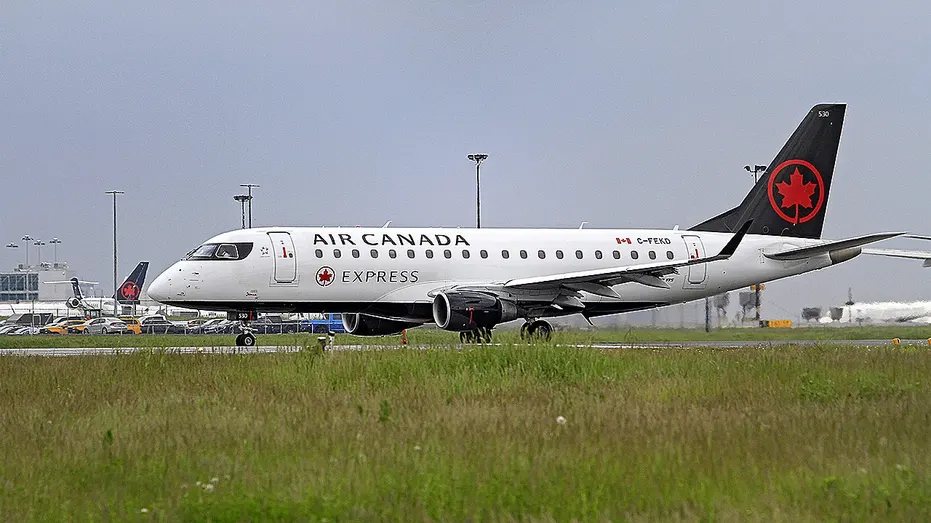
Air Canada Flight with 61 Passengers Diverts to Boston After Captain Removed from Cockpit Midair
Air Canada flight with 61 passengers – On Wednesday, an Air Canada flight carrying 61 passengers was forced to divert to Boston’s Logan International Airport following a sudden midair medical emergency that required the captain to be taken out of the cockpit. The incident, involving flight AC7664, occurred as the aircraft was en route from Newark, New Jersey, to Halifax, Nova Scotia, and was operated by PAL Airlines, a regional partner of Air Canada. The De Havilland Q400 turboprop, known for its reliability in short to medium-haul flights, had been in the air for approximately two hours when the unexpected event unfolded.
Pilot’s Medical Issue Sparks Diversion
Air Canada informed Fox News that the captain experienced a medical issue mid-flight, prompting the airline to initiate safety protocols. According to the airline’s statement, the decision to remove the captain from the cockpit was made to ensure the continued safety of the flight. While the specific condition of the pilot was not disclosed, the incident left passengers in a state of confusion and concern. The flight crew, including the first officer, had to quickly adapt to the situation, assuming full responsibility for navigating the aircraft to a safe landing.
“Passengers were caught off guard when the plane’s emergency systems activated, and the captain was taken out of the cockpit. There were audible screams from the cabin, but the crew remained calm and focused,” said a passenger who described the scene.
First Officer Takes Control Amid Crisis
Once the captain was removed, the first officer swiftly took command of the aircraft, successfully executing the diversion to Boston. The plane touched down at 1:37 p.m. local time without any reported issues, showcasing the pilot’s ability to handle emergencies even in the absence of a second crew member. Airline officials emphasized that pilots undergo rigorous training to manage such scenarios, ensuring they can operate the aircraft independently if necessary.
The diversion was brief, but it left passengers in a state of heightened anxiety. Many described the moment as surreal, with some unsure whether the situation was a routine maneuver or an urgent crisis. The airline’s customer service team was quick to respond, providing updates and reassurance to those onboard. According to Massport, the airport’s emergency services were prepared for the arrival, with Fire Rescue and Boston EMS personnel promptly attending to the crew.
FAA Investigation into Aircraft’s Go-Around
The Federal Aviation Administration (FAA) has launched an investigation into the incident, citing the plane’s need to execute a go-around after landing on an intersecting runway. The decision to divert was not only due to the captain’s condition but also because of the aircraft’s position relative to the runway during the approach. A go-around is a standard procedure used when a pilot determines that a landing cannot be safely completed, often due to weather, runway conditions, or crew concerns.
Massport confirmed that the aircraft landed without complications, with the crew receiving immediate medical attention. The first officer, who had been in charge of the flight since the captain’s removal, was reported to have handled the situation with composure. “The pilot’s actions during the diversion were precise and professional, which helped ease the passengers’ fears,” noted a Massport spokesperson. The FAA is now examining whether the pilot’s medical issue or the runway conditions played a more significant role in the event.
Passenger Rebooking and Operational Adjustments
Following the safe landing, Air Canada began coordinating with passengers to provide alternative travel arrangements. The airline’s management assured that all affected individuals would be rebooked on subsequent flights to Halifax, with accommodations made for those who required additional support. The incident has prompted a review of the airline’s emergency procedures, particularly in relation to crew training and communication during unexpected diversions.
The De Havilland Q400, which is commonly used for regional routes, is equipped with redundant systems to support single-pilot operations. However, the incident highlighted the importance of having a second pilot on board for critical situations. Air Canada’s CEO stated that the airline is committed to ensuring the highest safety standards, adding that the pilot’s condition was being evaluated by medical professionals at the time of the landing.
Details of the Captain’s Condition Remain Unclear
As of now, the exact nature of the captain’s medical emergency has not been disclosed. Air Canada officials have indicated that the pilot’s condition is being investigated, and the airline is working closely with medical teams to determine the cause. The captain was taken to a Boston hospital for further evaluation, though no details about the severity of the issue have been released.
Passengers aboard the flight have expressed gratitude for the crew’s swift response and the smooth landing. “Even though we were all a bit nervous, the crew did an excellent job keeping us informed and calm,” said one traveler. The incident has also sparked discussions about the safety of long-haul flights and the potential for midair emergencies to disrupt schedules and passenger plans.
While the FAA investigation is ongoing, the airline has reiterated its confidence in the pilot’s ability to manage the situation. “Our pilots are extensively trained to handle emergencies, and this incident underscores the importance of that preparation,” said an Air Canada representative. The airline is also reviewing its protocols for midair medical events, aiming to enhance procedures to minimize disruption to passengers in the future.
As the details of the captain’s condition continue to emerge, the focus remains on ensuring the safety and comfort of all passengers. The incident serves as a reminder of the critical role pilots play in aviation and the importance of well-structured emergency response systems. For now, the 61 passengers who were diverted to Boston are being accommodated, with plans in place to resume their journeys to Halifax as soon as possible.