Democratic Rep. Joyce Beatty Accuses Kennedy Center of Transforming into ‘Lifeless Husk’ Amid Legal Dispute
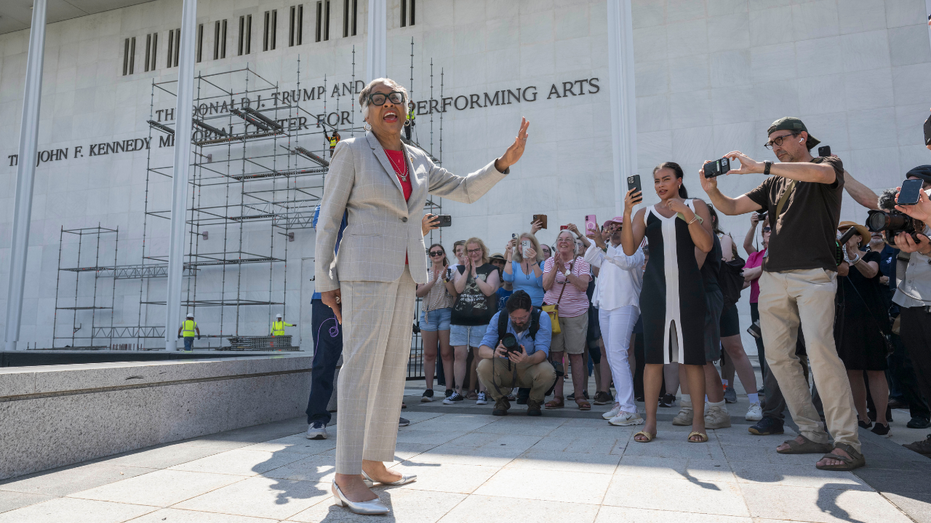
Dem who sued to remove Trump – Rep. Joyce Beatty, a Democratic representative from Ohio, has launched a new critique against the Kennedy Center, alleging that its leadership has allowed the Washington, D.C., institution to deteriorate into a “lifeless husk” by failing to restore its regular programming and events. As an ex officio member of the center’s board, Beatty previously initiated a legal challenge against President Donald Trump in December 2025, when the board decided to prominently display his name alongside that of President John F. Kennedy on the building’s signage. Her legal team now argues that the current board, which Trump chairs, is defying a May court order by not taking steps to maintain the Center’s operations, potentially leading to its closure as a performing arts venue by July 5, 2026.
“By refusing to take any steps to maintain the Center’s operations, the board is effectively ensuring its shutdown as a cultural hub,” Beatty’s attorneys stated in a recent court filing. “They plan to turn the Kennedy Center into a lifeless husk.”
Federal Judge Orders Trump’s Name Removed, Blocks Two-Year Closure
In a landmark ruling last month, U.S. District Judge Christopher Cooper mandated that the Kennedy Center remove Trump’s name from its premises, which was executed last weekend. The judge also prevented the center from proceeding with its planned two-year closure for renovations, citing concerns over the board’s management. However, Cooper’s 94-page order did not explicitly require immediate resumption of shows, noting that the board “has at least some plans to restart rehearsals, performances, and educational programming.” His decision emphasized that the board “bears an affirmative duty to carry out the Center’s programming and maintain a memorial to President Kennedy,” though it left room for gradual revival.
Kennedy Center Lawyers Outline Reopening Options
The Kennedy Center’s legal representatives have outlined three potential strategies to address the ongoing dispute. These include a full closure with no programming, a partial closure that would keep certain areas open while allowing performances in unaffected spaces, and a phased repair plan aimed at restoring the full schedule of events. A vote on these options, which remain unfinalized, is set for mid-July, according to the center’s lawyers. The decision, they argue, hinges on balancing the need for renovation with the venue’s cultural mission.
Beatty’s legal team has accused the board of using the closure as a means to diminish the Kennedy Center’s status as a public institution. They claim the board has “purposely delayed action to ensure the Center remains inoperative, effectively erasing its legacy as a beacon of arts and culture.” The lawsuit, initially filed in December 2025, focused on the addition of Trump’s name to the building, which Beatty’s lawyers argued was an attempt to “infuse political influence into the Center’s operations” and undermine its independence. The current board, dominated by Trump allies, is accused of prioritizing political alignment over the venue’s artistic integrity.
Trump’s Alleged Role in Board Reorganization
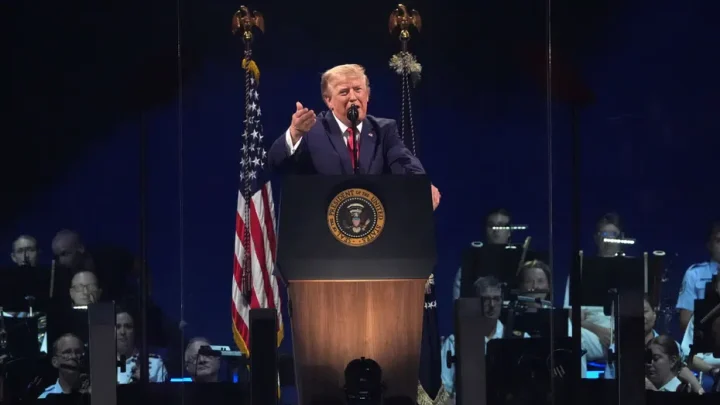
The conflict at the Kennedy Center began in February 2025, following Trump’s re-election as president. Shortly after, he took decisive action to reshape the board, replacing several trustees and appointing himself as a member. The newly formed Trump-aligned board subsequently elected him as chairman, a move that enabled him to fire the center’s previous president, Deborah Rutter. In a May 2025 speech, Trump criticized Rutter’s leadership, stating that her tenure “wasted millions of dollars and left a $26 million budget deficit.” He further accused the board of “letting programming spiral out of control” with “rampant political propaganda, DEI initiatives, and inappropriate shows.” According to Trump, “we had some very inappropriate shows, to put it very nicely,” which he claimed were damaging to the Center’s reputation.
Beatty’s legal challenge was not the first to target the board’s decisions. Earlier in 2025, Trump had announced the two-year closure of the Kennedy Center on his social media platform, Truth Social, a move that was later halted by the lawsuit. The closure, which would have kept the venue shuttered during renovations, was a key point of contention. Cooper’s ruling in May 2025 ensured that the closure could not proceed without approval, but it did not eliminate the possibility of future interruptions. The judge’s order has since become a focal point for the ongoing battle between the center’s leadership and its detractors.
Ex Officio Members Lose Voting Rights, Sparking Political Tensions
Amid the controversy, the board stripped all 23 ex officio members of their voting rights in May 2025. This move effectively sidelined key Democrats, including Senate Minority Leader Chuck Schumer, as well as Trump administration officials such as Secretary of State Marco Rubio and Education Secretary Linda McMahon. The decision was seen as a strategic effort to consolidate control over the center’s operations and decision-making processes. Beatty’s lawsuit, however, has highlighted the political ramifications of this reorganization, with critics arguing that it undermines the Center’s democratic oversight.
As the July 5, 2026, deadline for the center’s closure looms, tensions remain high. The Kennedy Center’s lawyers insist that the board is actively seeking solutions to preserve the venue’s function, while Beatty and her allies maintain that the current leadership is dismantling its legacy. The dispute has drawn national attention, with legal experts suggesting it could prolong the fight for years. Jonathan Turley, a law professor, noted that “Trump’s Kennedy Center name change will keep lawyers busy for years,” underscoring the complexity of the case and its potential to set precedents for political influence in cultural institutions.
The Road to Reopening and the Fate of the Kennedy Center
With the board set to vote on its reopening plans in mid-July, the outcome remains uncertain. The options—ranging from a complete shutdown to a phased revival—reflect the competing priorities of the leadership. Meanwhile, the removal of Trump’s name from the Kennedy Center’s signage on June 13 marks a symbolic shift, though the legal battle over its display continues. The sign, which previously read “The Donald J. Trump and John F. Kennedy Memorial Center For The Performing Arts,” now bears only Kennedy’s name, signaling a step toward restoring the venue’s original identity. Yet, the question remains: will this change lead to a full recovery, or will the Kennedy Center’s future be defined by its political entanglements?
The saga highlights the broader implications of political control over cultural institutions. Critics argue that the board’s decisions—such as the name change and the closure—reflect a prioritization of partisan interests over public service. Supporters of the current leadership, however, contend that the changes are necessary to streamline operations and align the center with contemporary values. As the July vote approaches, the Kennedy Center stands at a crossroads, its fate intertwined with the legal and political forces shaping its direction. Whether it emerges as a vibrant arts hub or a politically driven entity remains to be seen, with the outcome likely to influence public perceptions of the institution for years to come.