
Trump hints at wind down of war as US prepares to send more troops to Gulf
Trump hints at wind down of war as US prepares to send more troops to Gulf
President Donald Trump suggested a potential reduction in military involvement in the Middle East, even as the US is reportedly dispatching additional forces to the region. This decision follows Iran’s threat to target global tourist sites and ongoing airstrikes, drone strikes, and missile attacks that have intensified across the area.
The White House disclosed that Washington is examining options to control or block Iran’s vital Kharg Island, a strategic location near the Gulf’s northern edge. The island serves as a critical hub for Iranian oil exports, with approximately 90% of its crude shipped through the terminal. Despite earlier statements dismissing the need for ground troops, the administration now appears open to occupying the island, which is just 16 miles from the city of Bushehr.
Mixed signals from the administration
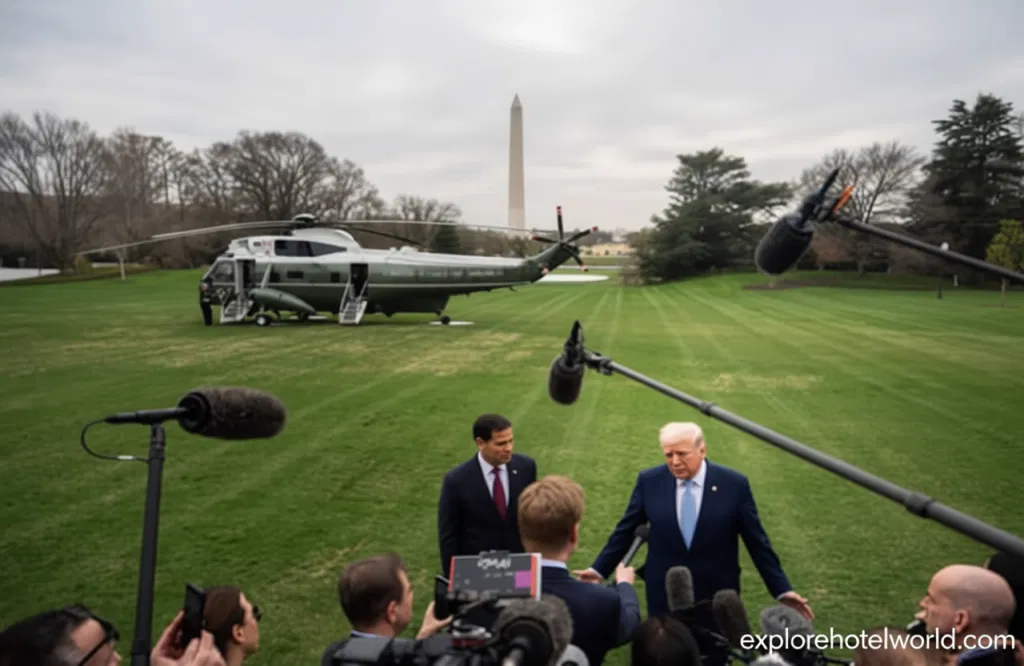
Trump’s remarks on Friday were contradictory. Initially, he dismissed the possibility of a ceasefire, asserting that the US held the advantage. “I don’t want to do a ceasefire,” he said, adding that such an agreement would only occur when the opposing side was “literally obliterating.” Later that evening, he posted on his Truth Social platform, stating the US was “considering winding down” its military efforts against Iran. “We are getting very close to meeting our objectives,” he wrote, framing the operation as a military success with minimal risk for allies.
Kharg Island’s significance cannot be overstated. Its 8-square-mile size and proximity to Iranian offshore oil fields make it a linchpin for the country’s energy economy. Any attempt to seize control would likely face fierce resistance, given Iran’s reliance on fossil fuel revenues and the island’s symbolic role in regional geopolitics.
Escalating tensions and shifting strategies
The Pentagon has already moved the 31st Marine Expeditionary Unit, a rapid-response force of around 2,200 marines, to the Middle East. The USS Boxer, carrying this unit, is set to depart the US three weeks ahead of schedule. However, details about their mission remain unclear. The military’s evolving plans reflect a war whose outcomes have grown unpredictable, with administration officials adjusting narratives daily.
Despite Trump’s assertion that the US has no plans to deploy troops, a White House official emphasized the president’s retention of all strategic options. “As President Trump said, he has no plans to send troops anywhere,” the official noted, while acknowledging that the US military could seize Kharg Island at any moment. The administration’s contradictory briefings highlight the complexity of its approach, as its allies in Israel also remain ambiguous about their goals.
“Without the U.S.A., NATO IS A PAPER TIGER! They didn’t want to join the fight to stop a Nuclear Powered Iran. Now that fight is Militarily WON, with very little danger for them, they complain about the high oil prices they are forced to pay, but don’t want to help open the Strait of Hormuz, a simple military maneuver that is the single reason for the high oil prices. So easy for them to do, with so little risk. COWARDS, and we will REMEMBER!”
Meanwhile, the conflict showed no signs of easing. An Iranian drone strike targeted a Kuwait refinery, while the US and Israel launched attacks on 16 Iranian cargo vessels in Gulf port towns. A local representative from Hormozgan province reported that the vessels belonged to residents of Bandar Lengeh and Bandar Kong, many of which were reduced to ash. Explosions in Dubai further underscored the region’s volatility as air defenses intercepted rockets during Eid al-Fitr celebrations.
