
Israel bans Friday prayers at Al-Aqsa Mosque despite Purim celebrations proceeding
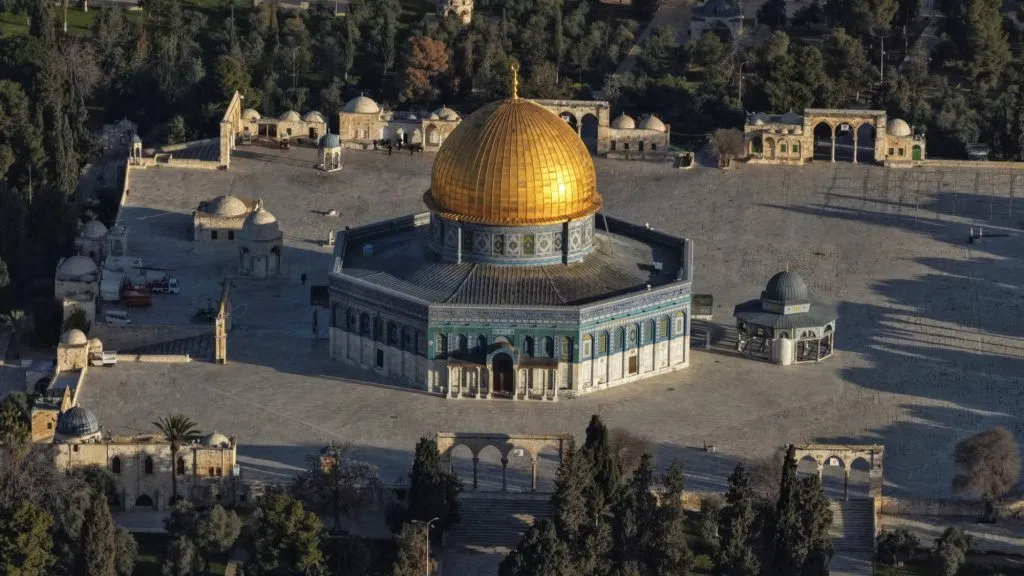
Israel Prohibits Friday Prayers at Al-Aqsa Mosque Amid Iran Conflict
Israeli authorities have prohibited Friday prayers at Al-Aqsa Mosque, citing the ‘security situation’ in the context of the Iran conflict, while Purim festivities have proceeded elsewhere in the city.
Concerns Over Prolonged Closure
Aouni Bazbaz, head of international affairs at the Islamic Waqf, which oversees Al-Aqsa Mosque, expressed worries about the closure’s implications.
“The extended closure during Ramadan, when normal activity typically resumes, may pose risks and long-term implications that cannot be ignored,” Bazbaz stated to Middle East Eye.
Bazbaz warned that sustained restrictions could intensify tensions and public frustration, possibly destabilizing the region.
“This scenario could set a harmful precedent, enabling future closures of religious sites with greater ease,” he added.
The occupation authorities are shaping a new access model for Al-Aqsa Mosque through ongoing closures.
Public Safety Justification Questioned
Israel closed Al-Aqsa Mosque and the Old City shortly after launching its military campaign against Iran on Saturday.
Only a few mosque staff have been permitted entry, with access to the Old City limited to locals and merchants. Israeli forces are stationed at the city gates, blocking non-residents from entering.
During Ramadan, the Old City and the mosque are usually packed with thousands of Palestinian worshippers. However, the area is now largely empty, while large Israeli gatherings for Purim continue in other parts of the city.
Fakhri Abu Diab, a Jerusalem-based activist and expert, dismissed the security rationale as misleading.
“The police and government show no concern for our safety, and there are no bomb shelters for Palestinians in Jerusalem,” Abu Diab told Middle East Eye.
He argued that the closure aims to displace worshippers, reducing their ability to practice religion during Ramadan.
“We are barred from reaching Al-Aqsa, yet people remain in the streets and markets. The shops operate, institutions function, and daily life proceeds normally—while the sacred space, not a target, is shut down,” Abu Diab added.
Historical Context and Legal Implications
Al-Aqsa Mosque has traditionally been governed under an international framework that preserves its status as a purely Islamic site. Control over access is managed by the Jordanian-appointed Islamic Waqf.
Since 1967, when Israel occupied East Jerusalem, Palestinians claim this arrangement has been gradually weakened. Restrictions on Muslim access have increased, while Jewish influence and Israeli control have expanded.
Israeli dominance over East Jerusalem, including the Old City, contravenes international law, which states an occupying power cannot enact permanent changes without sovereignty.
Waqf’s Response and Future Concerns
The Islamic Waqf has not yet released an official statement on the recent closure. However, Bazbaz highlighted fears of long-term transformation.
“What began as a temporary measure might evolve into a permanent or semi-permanent system, especially if people adapt to the restrictions or if access patterns shift,” Bazbaz noted.
