
Iran is escalating the war by placing explosive mines along a key oil route. Here are the risks.
Iran’s Strategic Move: Mining the Strait of Hormuz
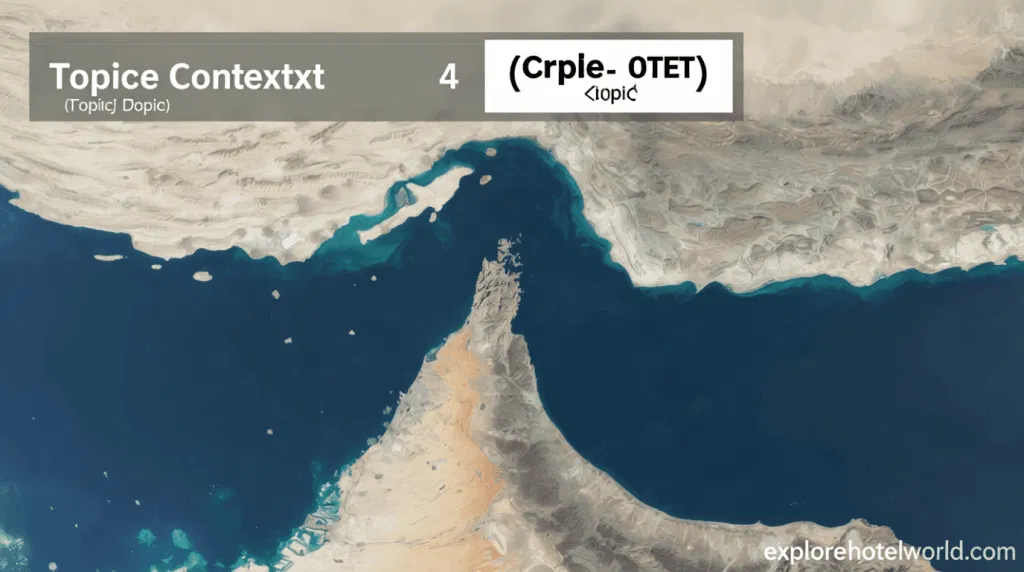
Despite being outgunned and outspent by the US and Israel, Iran has leveraged its control over the Strait of Hormuz to intensify the conflict. This narrow waterway, a vital conduit for one-fifth of the world’s oil supply, has become a focal point for Tehran’s asymmetric tactics. Recent reports indicate Iran has begun placing mines in the strait, raising concerns about disrupting maritime traffic and signaling a new phase in the war.
According to two individuals with access to US intelligence, Iran has deployed around a few dozen mines in the strait. While the operation isn’t large-scale, it demonstrates the country’s capacity to maintain over 80% to 90% of its small boats and minelayer fleet, contradicting claims by former US President Donald Trump that Iran has “no navy.” This strategy highlights how Iran continues to rely on unconventional warfare to challenge its adversaries.
“If Iran has put out any mines in the Hormuz Strait, and we have no reports of them doing so, we want them removed, IMMEDIATELY!”
Trump’s assertion was reiterated in a recent social media post, where he warned that failure to remove mines could result in “consequences at a level never before seen.” However, he also acknowledged that removing “what may have been placed” would be “a giant step in the right direction.” Meanwhile, the UKMTO, a British entity operated by the Royal Navy, noted that “there remains no confirmed evidence of mine deployment or detonation” in the waterway.
The US Congress estimated last year that Iran possesses between 5,000 to 6,000 naval mines, varying in design and function. Limpet mines are manually attached to hulls by divers, while moored mines float just beneath the surface and trigger explosions on contact. Bottom mines rest on the seafloor, detonating when detecting nearby vessels. These diverse mine types enhance Iran’s ability to create a layered threat in the strait.
Recent incidents underscore the risks. On Tuesday, the IRGC claimed they targeted the Thai-flagged bulk carrier Mayuree Naree, causing an explosion in its engine room. Thai authorities reported three of the 23 crew members remaining missing. The same day, the Liberian-flagged Express Rome was struck by Iranian projectiles, as per the country’s military. These attacks highlight the strait’s vulnerability to Iranian operations.
US Central Command reported Tuesday that it had neutralized multiple Iranian naval ships, including 16 minelayers, near the strait. However, the command did not confirm any mines were destroyed, suggesting they may have already been laid. This aligns with the broader narrative of Iran using mines as a strategic tool to deter passage, even as US and Israeli airstrikes continue to pressure its forces.
The US’s ability to clear mines in the Persian Gulf has diminished. The last of its four dedicated minesweepers was decommissioned last September, leaving the navy reliant on less specialized vessels. Littoral combat ships (LCS), now tasked with this role, have faced reliability issues, prompting critics to nickname them “Little Crappy Ships.” These challenges complicate efforts to counter Iran’s mining operations.
Prolonged blockage of the Strait of Hormuz has serious economic repercussions. Analysts note that nearly 15 million barrels per day of crude and 4.5 million barrels per day of refined oil are stranded in the gulf, leading to rapid filling of regional storage facilities. Even in peacetime, navigating the strait’s narrow channels and heavy traffic demands precision. Mines now amplify these dangers, making reopening the waterway more complex.
