New Wheeled Robot Says No Thanks to Humanoid Hype
New wheeled robot says no thanks – The robotics industry is currently dominated by a familiar design: humanoid forms with two legs, expressive faces, and bodies that mimic human proportions. Genesis AI, however, is challenging this trend with Eno, its first general-purpose robot. Unlike competitors focused on replicating human appearance, the company is prioritizing functionality over aesthetics. This approach positions Eno to deliver greater practical value in everyday environments, such as warehouses, labs, and factories, where reliability and efficiency are paramount.
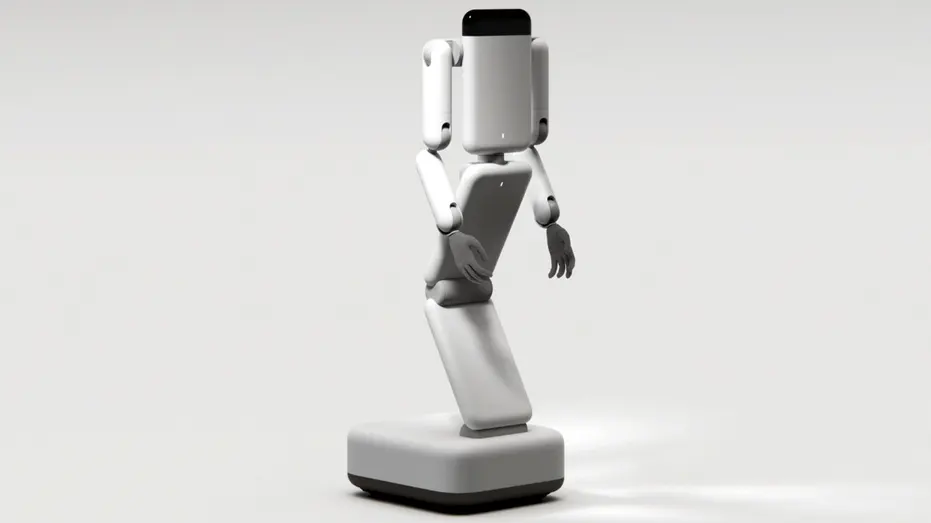
Eno’s design is a departure from the humanoid norm. Instead of mimicking the human form, it features a wheeled base that allows for seamless navigation across flat surfaces. This decision is rooted in the company’s belief that wheels offer a more stable and cost-effective solution for industrial tasks. Genesis AI argues that while humanoid robots capture public imagination, they often introduce unnecessary complexity. Legs, for instance, increase mechanical failure points and require more maintenance, whereas wheels simplify movement and reduce the risk of disruptions.
“Industrial customers actually asked for wheels,” Genesis AI emphasized. “They want a robot that can move reliably through a workspace and get a job done without the complications of bipedal motion.”
The wheeled base is just one aspect of Eno’s design. Its tower-like body, constructed from articulated panels, enables height adjustments and extended reach when needed. This modular structure allows the robot to adapt to varying tasks, from picking up tools in a workshop to accessing high shelves in a storage facility. When not in use, Eno can fold down, minimizing space requirements and making it ideal for environments with limited room.
Genesis AI’s innovation extends beyond physical design. The company is integrating GENE, its robotics-native AI system, to give Eno the ability to reason, learn, and execute tasks independently. This means Eno won’t just follow pre-programmed instructions—it will analyze its surroundings, make decisions, and adjust its approach as conditions change. For example, if a tool is out of reach, Eno could autonomously reposition itself to complete the task, rather than relying on human intervention.
The AI’s capabilities are further demonstrated through Genesis AI’s recent release of GENE-26.5, a robotic foundation model system. This system supports complex physical manipulations, such as cooking, lab pipetting, and even solving a Rubik’s Cube. By combining advanced hardware with AI-driven decision-making, Genesis aims to create a robot that can handle diverse responsibilities without the need for constant recalibration.
A Cognitive Interface for Transparency and Trust
One of Eno’s standout features is its optional cognitive interface—a screen that displays real-time data on what the robot is thinking and doing. This tool is designed to enhance user confidence by providing visibility into Eno’s actions. For instance, if the robot is rerouting to avoid an obstacle or preparing to grasp an object, the interface will show the plan, reducing uncertainty and potential safety risks in shared spaces.
The interface could also serve as a bridge between technology and human interaction. In environments where robots and people work side by side, such as hospitals or hotels, understanding the robot’s intentions is crucial. Genesis AI highlights that this transparency might make Eno feel less alien in spaces where human presence is essential. “Seeing what Eno is about to do could cut down on guesswork,” the company notes. “It could also make the robot feel a little less unsettling in shared spaces.”
The Road Ahead: From Factories to Homes
Genesis AI has outlined a strategic rollout plan for Eno, starting with industrial applications. The first deployments are expected in manufacturing, logistics, and laboratories by the end of 2026. These sectors provide structured environments where robots can thrive, offering clear tasks and predictable workflows. After this phase, the company plans to introduce Eno to service-oriented settings like hotels and hospitals, with home and outdoor uses following later.
This phased approach is logical. Factories, for instance, are designed for efficiency, with consistent layouts and minimal variables. In contrast, homes are dynamic spaces filled with unpredictable elements—clutter, pets, and changing routines. By addressing industrial needs first, Genesis aims to build a solid foundation for Eno’s capabilities before expanding into more complex environments. The company believes that mastering factory tasks will pave the way for Eno to tackle more intricate, real-world challenges.
The phrase “general-purpose robot” sounds simple, but the reality is far more complex. While a factory robot can weld the same part thousands of times with precision, a general-purpose model must adapt to multiple tasks, understand context, and handle unexpected situations. Genesis AI claims its GENE system is engineered to meet these demands. “The model gives Eno memory, reasoning, and the ability to plan multistep tasks over time,” the company stated. This adaptability is key to its vision of a robot that can learn and evolve, rather than just follow rigid protocols.
Eno’s potential to revolutionize automation is evident in its design philosophy. By avoiding the humanoid hype, Genesis AI is focusing on solving practical problems that arise in industrial settings. The robot’s ability to interact with tools, doors, handles, and everyday objects demonstrates its versatility. However, the hands remain a critical factor in its success. Genesis AI has developed proprietary dexterous robotic hands that mirror the form and function of human limbs, enabling precise actions like grasping, twisting, and lifting. Without these hands, Eno would struggle to perform tasks that require fine motor control, reducing its effectiveness to that of a mobile camera with arms.
As the industry debates the merits of humanoid versus wheeled designs, Genesis AI is betting on the latter. Its vision for Eno is not just about moving efficiently but about doing so intelligently. The robot’s combination of reliable mobility, AI-driven reasoning, and adaptable tools positions it as a serious contender in the automation landscape. While challenges remain, the company’s approach underscores a growing trend: prioritizing utility over mimicry in the quest for smarter, more capable machines.
The future of robotics is being reshaped by innovation that breaks from tradition. Eno represents a shift toward practicality, offering a model that may soon outpace humanoid alternatives in both functionality and cost-effectiveness. As Genesis AI continues to refine its technology, the question remains: will the public embrace a robot that looks more like a machine than a person, or will the humanoid dream still dominate? The answer may depend on how well Eno can balance simplicity with sophistication in the real world.