Scotland’s Tartan Army Transforms Red Sox Game at Fenway Park into a Cultural Celebration with Bagpipes and Singing
Scotland s Tartan Army soccer fans – As the 2026 FIFA World Cup approached, anticipation built across the globe for the event’s unprecedented scale. Hosted jointly by the United States, Mexico, and Canada, the tournament sparked both excitement and skepticism among international fans. Concerns arose about the Trump administration’s immigration policies potentially complicating access for overseas supporters. Others questioned whether the host venues—such as Los Angeles Stadium, Boston Stadium, and Seattle Stadium—would live up to the prestige of World Cup matches. These worries, however, were quickly dispelled by the overwhelming energy and enthusiasm displayed at the opening games.
One of the standout moments came in Los Angeles, where the U.S. Men’s National Team’s (USMNT) debut victory over Paraguay captivated audiences. The atmosphere at the game was electric, with fans chanting and waving flags in a display of national pride. Even non-American commentators like Thierry Henry and Zlatan Ibrahimović praised the crowd’s fervor, sharing emotional reflections on the event’s vibrancy. Similar scenes unfolded at other venues, such as the New York-New Jersey Stadium, where the Brazil vs. Morocco match became a testament to the global appeal of the tournament.
Boston, in particular, emerged as a focal point of the World Cup’s cultural impact. The city’s Fenway Park, traditionally a baseball venue, was transformed into a vibrant hub of Scottish heritage during the team’s visit. The entire New England region had been seized by the Tartan Army, the devoted fanbase of the Scotland national football team. Known for their relentless support, the Tartan Army made their presence felt long before the game, with chants and traditional music echoing through the streets. Their influence was evident as the Scottish national anthem resonated through Boston Stadium prior to the match against Haiti, which Scotland won 1-0, further energizing the crowd.
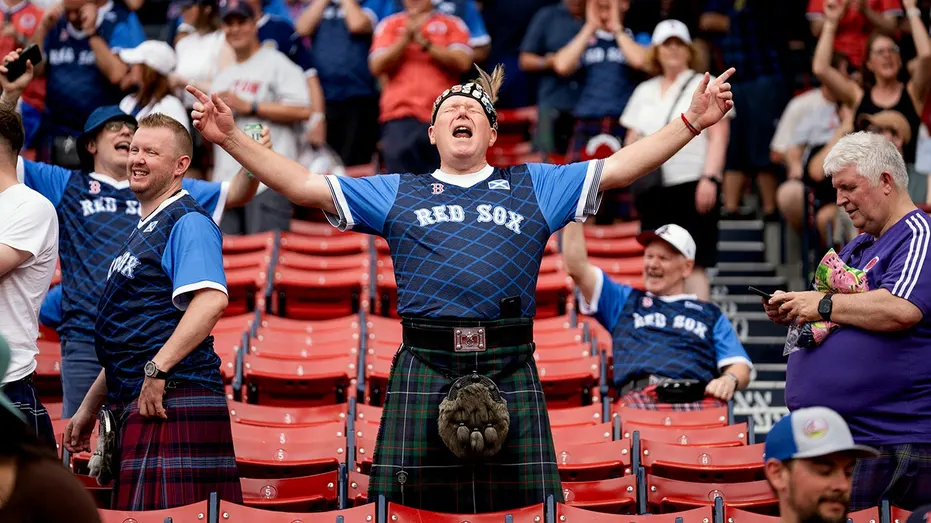
Yet the Scots’ impact extended beyond the soccer field. On Sunday, Fenway Park hosted Scottish Heritage Night, an event designed to celebrate the cultural ties between the United States and Scotland. The Red Sox, in collaboration with local organizers, distributed specially themed Tartan jerseys to attendees. The result was a spectacle that blended baseball and soccer traditions, creating a unique celebration of shared heritage. Fans arrived in droves, their enthusiasm rivaling that of the local sports teams, as they embraced the opportunity to showcase their pride in a different setting.
Before the game, the Tartan Army engaged in a lively procession to the stadium, performing traditional Scottish tunes and marching in unison. Their efforts were met with warm reception, as Boston fans welcomed them with open arms. MLB.com reached out to several attendees, who shared heartfelt accounts of the experience. Susan Swindells, one such fan, expressed her admiration for the welcoming environment:
“Oh, it’s been fantastic, actually,” she said. “I think Boston’s really taking us into their hearts. We’ve got a really friendly welcome here, which is fantastic. It’s my second time in Boston. I actually came to my first baseball game at Fenway Park and saw the Red Sox beat the Twins a number of years ago. So it’s nice to be back again, and hopefully after we saw Scotland win last night, we’ll get to see another victory today.”
Swindells’ comments highlighted the mutual appreciation between Scottish and American fans, a rare moment of unity in a diverse sporting landscape.
The Tartan Army’s cultural contributions during the Red Sox game were nothing short of remarkable. Their integration of European soccer traditions—such as synchronized singing and the use of bagpipes—into a Major League Baseball event showcased the growing influence of global sports culture. The event’s success was palpable, with fans from all over the world immersing themselves in the festivities, even if they were unfamiliar with the sport. The atmosphere, described as “priceless,” was a reminder of the unifying power of live events and the shared joy of supporting a team, regardless of the sport.
Despite the Red Sox’s 6-4 loss to the Texas Rangers, the night at Fenway Park is likely to be remembered as one of the most memorable in the stadium’s history. The game, while not a victory for the team, became a highlight of the 2026 World Cup’s broader success. The Tartan Army’s presence was a sign of the event’s ability to transcend borders and create lasting memories for fans. As the tournament progresses, similar moments are expected to continue, solidifying the World Cup’s status as a global phenomenon. The blend of Scottish tradition with American baseball underscored the adaptability of sports culture and the joy of celebrating shared moments in unexpected places.
The 2026 FIFA World Cup has already proven to be a triumph in terms of fan engagement and cultural exchange. From the roaring crowds in Los Angeles to the heartwarming interactions in Boston, the event has demonstrated that the spirit of sports can unite people across continents and sports disciplines. The Tartan Army’s performance at Fenway Park was a perfect example of this, as they brought the energy of a European soccer match to a baseball game, creating a spectacle that defied expectations. Such moments are not just about the game itself, but about the connections forged between fans, the traditions honored, and the shared excitement that transcends borders.
As the World Cup continues, the success of events like Scottish Heritage Night serves as a powerful reminder of the tournament’s ability to create unforgettable experiences. The Red Sox’s loss may be a footnote in the game’s history, but the cultural significance of the night will linger far beyond the final score. For fans of Scotland and the United States, it was a celebration of unity, tradition, and the universal language of sports. The 2026 FIFA World Cup is not just about the matches; it’s about the communities that come together to make them unforgettable.