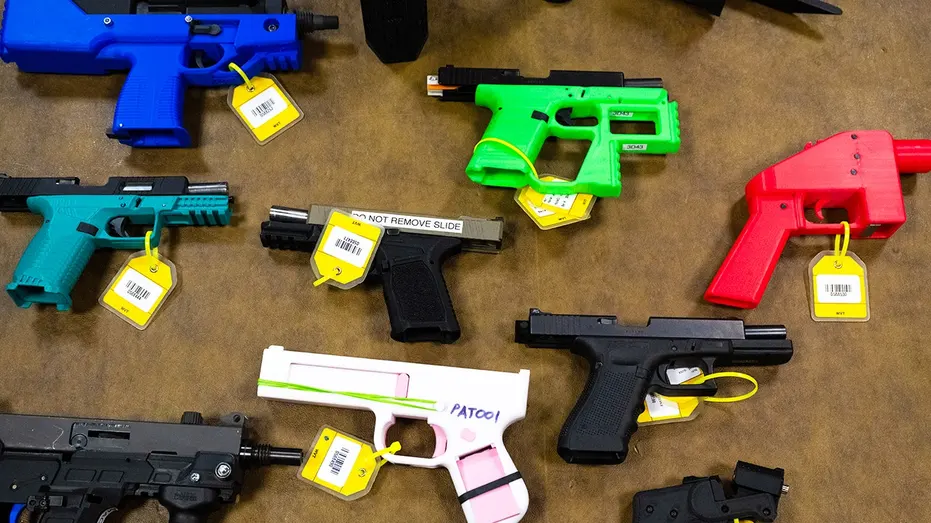
Second Amendment Disputes Intensify as States Regulate 3D-Printed Firearms
Second Amendment fights grow across several – Recent months have seen a surge in legislative activity targeting 3D-printed guns, sparking heated debates over the balance between public safety and the right to bear arms. As states across the nation grapple with the legal implications of these firearms, lawmakers have introduced a variety of measures to curb their proliferation. From imposing restrictions on possession to requiring serial numbers, the focus has shifted to addressing “ghost guns”—firearms that lack manufacturer-assigned serial numbers and can be produced at home using 3D printing technology.
State Actions and Legislative Momentum
At least 16 states have already enacted laws governing 3D-printed weapons, with seven new measures passing in 2026 alone. Colorado, New Jersey, Maine, New York, Virginia, and Washington have all implemented rules to limit access to untracked firearms. In California, legislators have taken a more proactive stance by advancing a bill that would mandate 3D printer manufacturers to include technology capable of blocking the production of guns. This builds on the state’s existing robust framework for regulating firearms, demonstrating a growing emphasis on controlling the technology that enables their creation.
One notable case emerged in Maryland, where a man was arrested after authorities discovered a large cache of illegal ghost guns in his residence. This incident highlighted the potential risks associated with unregulated firearms, fueling calls for stricter oversight. Meanwhile, in New York, lawmakers added a similar law to the state’s budget, which will take effect by mid-June. The measure is designed to restrict the availability of serial-free weapons, aligning with efforts to track firearms and hold manufacturers accountable.
The Role of Digital Blueprints and Unlicensed Production
Key to these restrictions is the control of digital blueprints, which serve as templates for 3D-printed firearms. In January, Maine’s legislature passed a bill requiring all firearms, including those produced via 3D printing, to carry serial numbers. This step aims to create a traceable system for firearms, much like traditional gun manufacturers. Similarly, New Jersey’s former governor, Phil Murphy, signed Bill A4975 in January, mandating that residents obtain a firearms license before accessing instructions or blueprints for printing 3D guns. This law directly targets the ability of unlicensed individuals to produce weapons, raising concerns about the accessibility of gun-making tools.
Washington state’s governor, Bob Ferguson, also signed legislation in March that not only bans the possession of serial-free weapons but also imposes constraints on the digital files and devices used to create them. The law reflects a broader strategy to make it harder for individuals to bypass traditional gun regulations. These measures collectively signal a bipartisan push to address the unique challenges posed by 3D-printed firearms, even as advocates argue that they threaten the core principles of the Second Amendment.
Supporters and Opponents of the New Regulations
Proponents of stricter laws argue that the rise of 3D-printed guns has made it easier for individuals to acquire firearms without oversight. The Bureau of Alcohol, Tobacco, Firearms and Explosives (ATF) reported a significant increase in the number of ghost guns recovered from crime scenes, with over 27,000 seized in January 2023 compared to just over 1,600 in January 2017. This data underscores the growing concern that untracked weapons could contribute to more frequent and unpredictable acts of violence.
Advocates for gun rights, however, counter that these regulations infringe on constitutional freedoms. William Sack, senior director of legal operations at the Second Amendment Foundation, emphasized that “the gun is not the problem. The individual committing the crime is the problem.” He argues that banning 3D-printed firearms does little to address the root cause of gun violence, which he attributes to the people using the weapons rather than the technology itself.
Legal Challenges and Constitutional Battles
States implementing these laws now face a wave of constitutional challenges, as critics claim they violate the Second Amendment. In February, a three-judge panel on the United States Court of Appeals for the Third Circuit ruled in favor of New Jersey in a case involving Defense Distributed, a Texas-based company that designs 3D-printed gun blueprints. The court upheld a lower ruling that supported New Jersey’s Attorney General in ordering Defense Distributed to cease distributing blueprints to unlicensed individuals. This decision has been seen as a significant victory for states seeking to regulate the production and distribution of ghost guns.
Defense Distributed’s legal team, however, is not conceding defeat. They plan to petition the Supreme Court if the Third Circuit does not overturn the ruling. This ongoing litigation highlights the tension between state-level innovation in gun regulation and the potential for federal intervention. Meanwhile, other states like Minnesota have attempted to pass broader restrictions but have faced setbacks, with a legislative package failing to gain enough support in March.
Broader Implications for Gun Ownership and Public Safety
The push for 3D-printed gun laws also raises questions about the future of firearm accessibility. Critics warn that such measures could stifle innovation and limit the ability of responsible citizens to produce their own weapons. They point to the affordability and ease of use of 3D printers as a factor that makes these tools particularly appealing to individuals who might otherwise be unable to purchase a gun. For instance, schools have increasingly adopted 3D printers, bringing the potential for homemade firearms into educational settings.
Supporters, on the other hand, believe that stricter regulations are essential to preventing the spread of untraceable weapons. The Everytown For Gun Safety website notes that “as 3D-printing technology becomes more affordable and accessible, young people are increasingly able to manufacture their own firearms—often without the knowledge of the adults in their lives.” This trend, they argue, could lead to more incidents of gun violence, particularly in communities where access to traditional firearms is limited.
Evolution of the Debate and Future Outlook
The debate over 3D-printed guns has evolved from a niche discussion into a central issue in state and federal policy. With each new law, the discussion becomes more polarized, as advocates for gun rights and public safety clash over the best approach to reducing gun-related harm. The rise of digital blueprints and the ability to print firearms at home have made the conversation more urgent, as lawmakers seek to address the growing presence of ghost guns in both crime scenes and everyday life.
As this issue continues to shape legislative agendas, the outcome of ongoing lawsuits and the decisions of the Supreme Court will play a critical role in determining the future of 3D-printed firearm regulations. Whether these laws will stand as permanent measures or be struck down as violations of the Second Amendment remains to be seen, but their impact on the national conversation about gun control is already undeniable.
Conclusion: A New Frontier in Gun Regulation
The proliferation of 3D-printed guns has forced states to rethink traditional approaches to firearm regulation. While some lawmakers see these weapons as a threat to public safety, others view them as a tool for expanding individual freedoms. The evolving legal landscape reflects a broader struggle to reconcile technological advancements with constitutional rights, as the debate over ghost guns continues to gain momentum across the country.
As more states introduce measures to track and restrict 3D-printed firearms, the focus remains on how to balance innovation with accountability. The success of these laws will depend on their ability to address the unique risks of unserialized weapons while preserving the rights of law-abiding citizens. With the technology advancing and the legal battles intensifying, the future of 3D-printed gun regulation is likely to remain a contentious topic in American politics.