Scandal-Plagued Platner Secures Democratic Senate Nomination
Scandal plagued Platner captures Democratic Senate – In a dramatic turn of events, Graham Platner, a former military veteran and oyster farmer from Blue Hill, Maine, has emerged as the Democratic Party’s nominee for the U.S. Senate. Despite navigating a series of challenges in his campaign, including a barrage of scandals and allegations, Platner clinched the primary victory on Tuesday, according to the Associated Press. This win positions him to challenge the incumbent moderate Republican Senator Susan Collins in November’s midterm elections, a race that could shape the future of the Senate’s narrow Republican majority.
A Battle Against the Political Establishment
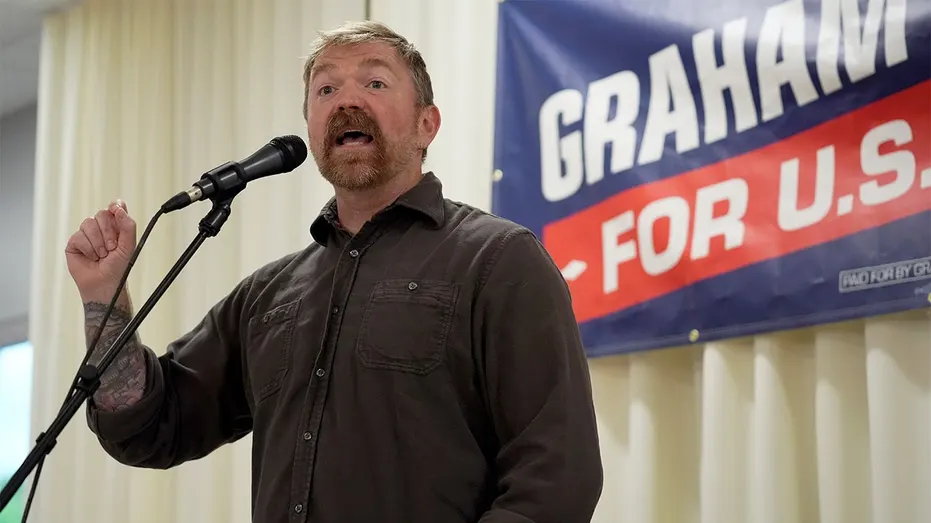
Platner’s campaign has framed its candidacy as a direct challenge to the entrenched political establishment, leveraging his background as a combat veteran and his advocacy for economic populism. Backed by prominent progressive figures such as Senators Bernie Sanders and Elizabeth Warren, as well as Congressman Ro Khanna, Platner’s platform emphasizes accountability for corporate interests and support for working-class Americans. His victory in the primary was celebrated as a statement against the traditional power structures of both major parties, with Platner himself highlighting this during a speech at the Blue Hill YMCA.
“Susan Collins said she would only serve two terms, she’s now running for her sixth,” Platner declared to the crowd, drawing a sharp contrast between the senator’s longevity and her perceived alignment with conservative interests. “She has worked in politics longer than Joe Biden,” he added, further positioning his campaign as a rebuke to the political elite.
Controversies and Campaign Defense
Platner’s path to the nomination has been marred by a series of scandals that have tested his credibility. Among the most notable are allegations of inflammatory online comments he posted on Reddit years ago, a tattoo on his chest that was initially praised as a symbol of military pride but later revealed to resemble a Nazi emblem, and reports of explicit messages exchanged with multiple women while married. These issues gained renewed attention as his campaign progressed, with critics arguing they could undermine his appeal to voters.
Adding to the scrutiny, new claims from ex-girlfriends have suggested Platner had a history of rape fantasies, heavy drinking, and episodes of aggression. While he has dismissed these allegations as untrue, the timing of his tattoo cover-up has raised questions about his awareness of its symbolism. Platner explained that the skull and crossbones design was applied in 2007 while he was stationed in Croatia with fellow Marines, but he only learned it resembled a Nazi symbol last year. This timeline has led to debates about whether he knowingly perpetuated a controversial image.
Despite the mounting controversies, Platner has remained resilient, rallying his supporters with a defiant message. At a campaign event near his hometown in Down East Maine, he addressed the allegations head-on, stating, “When hurtful things I said on the internet a decade ago came out into the public as I shared my personal journey through PTSD and the darkness of recovery and accountability and growth. Maine had my back.” He reiterated this sentiment during a recent rally, vowing, “Now, as every single piece of that past and journey gets dug up, litigated, and weaponized, you have my back. And when politically motivated, serious and false accusations are made against me. Maine, you have my back.”
The Road to the Senate
Platner’s primary victory was not without its hurdles. He narrowly defeated two underdog contenders, including the two-term Democratic Governor Janet Mills, who had initially been seen as the frontrunner. Mills’ campaign was suspended earlier this spring after she fell significantly behind Platner in fundraising and poll numbers, yet her name remained on the ballot, underscoring the competitive nature of the race.
With the Democratic nomination secured, Platner’s focus now shifts to the general election. The contest against Susan Collins is expected to be a tight battle, given Collins’ strong ties to the Republican establishment and her unopposed GOP nomination. The race is one of several critical contests nationwide that will determine whether the Republican Party can retain its slim Senate majority. Analysts note that the outcome in Maine could have broader implications, as it reflects the shifting dynamics of voter sentiment in traditionally moderate states.
Supporters and Strategic Allies
Platner’s campaign has been bolstered by strategic alliances with key figures in the Democratic Party. Senators Sanders and Warren, known for their progressive stances, have been vocal advocates for his candidacy, framing him as a fresh face capable of challenging the status quo. Congressman Ro Khanna, who co-organized one of Platner’s final campaign events, has also lent his support, emphasizing the importance of addressing issues like misogyny and toxic relationships in the political arena.
Khanna was asked by Fox News Digital whether the current wave of allegations could jeopardize Platner’s campaign or hinder Democrats’ chances of regaining control of the Senate. He responded by highlighting the need to stand against harmful narratives, stating, “I’m more concerned about making it clear that we’re opposed to misogyny, those relationships were toxic and volatile, there’s no excuse for the actions that have been scrutinized.” This sentiment aligns with Platner’s broader strategy of framing his campaign as a moral and ideological fight for the people’s interests.
As the midterm elections approach, Platner’s ability to maintain public support will be crucial. His journey from a small-town oyster farmer to a Senate candidate has been marked by both resilience and controversy, offering a microcosm of the challenges facing modern political figures. Whether his candidacy will ultimately succeed depends on how effectively he can reconcile his past with his present goals, as well as the strength of his message in a state that values both traditional values and progressive reform.
Platner’s victory signals a significant shift in the Democratic Party’s strategy, as it embraces candidates with diverse backgrounds and bold narratives. However, the race also highlights the risks of running on a platform that includes personal and political controversies, a challenge that will be tested in the upcoming general election. For now, the focus remains on Maine, where the fight for the Senate could redefine the political landscape for months to come.