Moana Joins Snow White in Disney Box Office Struggles
Moana joins Snow White as the latest live-action Disney film to struggle at the box office. The era of seemingly effortless live-action reimaginings from Disney Studios appears to be drawing to a close. For approximately ten years, the entertainment giant has prioritized revisiting its animated heritage rather than developing fresh, original content. This approach has yielded mixed results across both critical acclaim and commercial performance. Several adaptations have achieved notable success during this era. The 2015 retelling of “Cinderella” resonated with audiences, while 2016’s “The Jungle Book” captured widespread attention. Perhaps most remarkably, the 2019 version of “The Lion King” generated nearly $1.7 billion in global revenue despite being essentially a photorealistic recreation of the original. More recently, the 2025 “Lilo & Stitch” adaptation surpassed the $1 billion mark internationally. Yet these triumphs exist alongside considerable disappointments.
Moana’s Disappointing Theatrical Debut
The live-action adaptation premiered this past weekend without the same intensity of negative coverage that preceded other recent releases. Despite this, early indicators suggest another substantial financial disappointment for the studio. Disney allocated an impressive $250 million toward production alone, excluding promotional expenditures. When factoring in approximately $100 million for marketing—a typical allocation for major releases—the total investment reaches $350 million. With theaters retaining half of ticket sales, the film requires roughly $700 million globally to recoup its costs. Opening weekend figures tell a concerning story. The film earned $43 million domestically, representing approximately 40 percent of expected total domestic revenue. If this pattern continues, the domestic total would reach just $107 million.
By comparison, the animated original generated $248 million in 2016, equivalent to $346.5 million when adjusted for inflation. While international performance might improve slightly, the gap between current trajectory and profitability remains enormous. Disney had projected a $60 to $65 million opening weekend and $140 million worldwide. Instead, the film captured only $95 million in total, falling nearly $50 million below expectations.
Comparing to Snow White’s Struggles
The live-action “Snow White,” released earlier in 2025, represents one of Hollywood’s most significant modern financial failures. Rachel Zegler faced criticism for being miscast in the lead role, and her public commentary throughout the promotional cycle drew attention for its critical tone toward the original animated film. Leaked photographs from production created additional controversy, prompting a year-long delay while the studio reworked and reshot portions of the movie. Unfortunately, these efforts proved insufficient. Critics panned Zegler’s performance, and her public statements appeared to influence audience attendance negatively. Ultimately, “Snow White” cost Disney approximately $170 million.
What Went Wrong with the Remake?
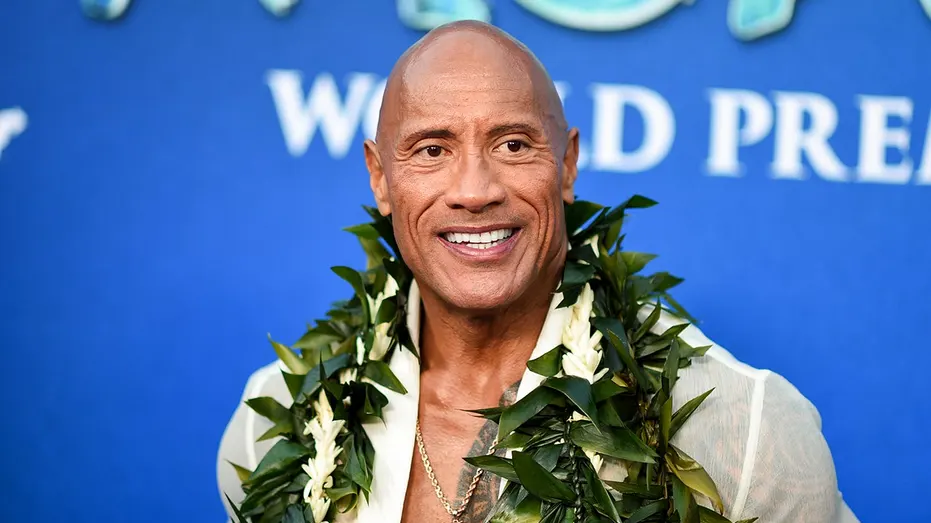
Reviewers and general audiences alike noted a perceived lack of dedication to the project. Dwayne Johnson’s wig received particular attention for its poor quality. Special effects were described as subpar, while background elements appeared artificial and overly desaturated compared to the vibrant world established in the original. The animated version remains only a decade old and is readily available through streaming platforms. Many viewers recognized the remake as primarily a commercial endeavor rather than a genuine artistic contribution.
Johnson’s public remarks regarding representation also drew scrutiny. During a red carpet interview with Variety, he explained his connection to the role:
“‘Indiana Jones’ inspired me. When I was 8 years old watching Harrison Ford, I was like, ‘I want to be that guy,’ but that guy didn’t look like me.”
While such comments alone likely did not sink the film, they reinforced perceptions of Hollywood’s tendency toward what some view as superficial pandering. Johnson achieved tremendous success in entertainment regardless of whether audiences saw themselves reflected in his appearance. The question remains whether films like this serve genuine cultural purposes or simply fulfill corporate mandates. With projected losses approaching $150 million, Disney faces mounting pressure to reconsider its approach to revisiting beloved animated classics.