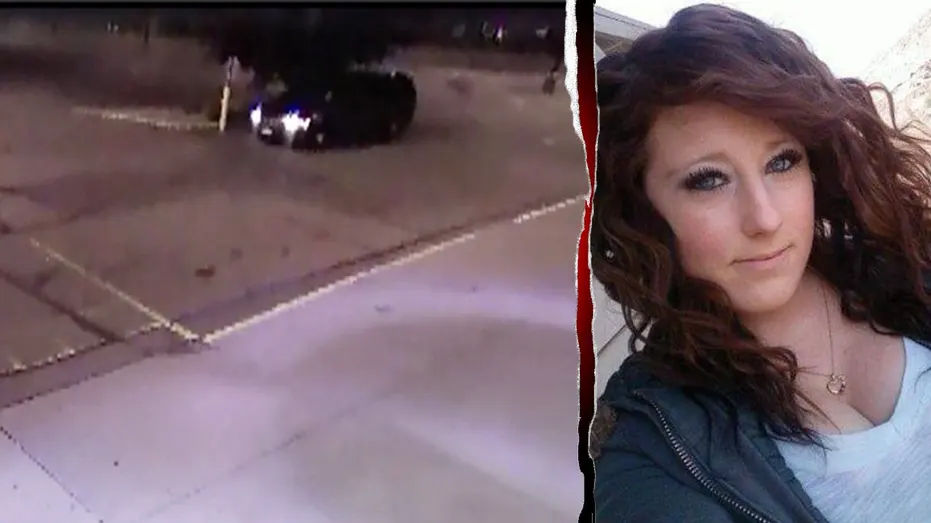
Aurora Police Turn to Podcasts to Solve Chelsea Yasser’s Decade-Old Murder
Detectives true crime podcast takes fresh – For more than ten years, investigators in Colorado have been working to solve a particularly puzzling homicide. Now, the Aurora Police Department is taking an unconventional approach by launching a podcast dedicated to the case of Chelsea Yasser, a young woman whose brutal killing was captured on surveillance video but whose killer remains at large.
The Night Chelsea Yasser Died
On the evening of May 15, 2016, just before 10 o’clock, 21-year-old Chelsea Yasser was found lying in the parking lot of a Burlington Coat Factory. She had recently relocated to the Aurora area from Arizona, making her somewhat unfamiliar to local residents. A concerned caller had reported seeing a woman on the ground, prompting officers to respond to the scene.
When police arrived, they discovered Yasser suffering from numerous stab wounds. She was quickly transported to a nearby hospital, where medical personnel pronounced her dead. Despite the violent nature of her death and the fact that it was recorded on grainy surveillance footage, the incident received relatively little media attention at the time.
“If you didn’t pick up the paper or if you weren’t watching the news that day, you might not know anything about this case,” Joe Moylan, a public information officer for the Aurora Police Department, explained to Fox News Digital.
Caught on Camera, But Not Identified
Surveillance cameras captured the harrowing moment a maroon van approached Yasser and pulled her inside. According to cold case detective Jason McDonald, the attack was particularly brutal.
“Chelsea was stabbed to death multiple times inside the minivan,” McDonald told Fox News Digital. “And she was able to get out and stumble over the curb of the business where this occurred, where she succumbed to her injuries.”
Despite the murder being filmed, investigators faced significant challenges. The poor quality of the footage made it impossible to read the vehicle’s license plate or clearly identify the driver. This limitation caused the case to go cold after several months despite initial efforts to gather evidence and leads.
“It’s kind of unique that the murder itself was on video, but we just haven’t been able to identify who the driver of the minivan was or the minivan itself,” McDonald said.
A Fresh Approach Through Storytelling
Now, a decade later, the department is pursuing new investigative avenues. McDonald noted that they are working with DNA evidence once again and exploring additional leads.
“We’re 10 years in. We have a few more investigative leads that we’re pursuing, and we’re working with DNA yet again to see what we can come up with,” McDonald said, adding, “The department is kind of going outside the box and reaching a public that we may not normally reach out to, which is the podcast community.”
After reviewing several cold cases, the department selected Yasser’s story for their debut podcast, titled “The White Whale – The Chelsea Yasser Story.” The five-episode series premiered on Monday and provides unprecedented access to case details.
“There’s about a 30 minute window where we just don’t know what occurred. So, it’s a pretty tight timeline,” Moylan said. “We think that there’s somebody out there that knows who this person is.”
Humanizing the Victim
The podcast goes beyond mere case facts, incorporating interviews with Yasser’s family and friends to present a complete picture of who she was.
“Our major crime and homicide unit has given us a lot more leeway to try to tell a fuller story than we might traditionally do with a more recent case,” Moylan told Fox News Digital. “So I think just through the storytelling and getting to know who Chelsea was, talking about what happened the day of and then what has transpired in the years since — what we’re really trying to do is identify the suspect and the driver of that van.”
“We have become such a statistics and numbers-driven society that we often forget that there are real people behind the numbers,” Moylan said, adding, “We don’t want her to be a number. She was a real person. She had a family. She had friends. She had people who cared about her.”
“She deserves justice,” Moylan continued. “Her family deserves some peace, and the person who murdered her needs to be held accountable.”