Colombian Soccer Federation Demands Investigation Into Campaz Death Threats
Historical Echoes of Tragedy
Colombian soccer federation demands investigation after – The Colombian soccer federation demands investigation after midfielder Jaminton Campaz received death threats following Colombia’s World Cup elimination. This urgent call for action comes 32 years after Andres Escobar’s murder, reminding the nation of football’s emotional intensity. The federation’s statement condemned the threats against Campaz and his family, drawing parallels to that dark chapter in Colombian sporting history.
Escobar’s tragic death in Medellin followed Colombia’s 2-1 loss to host nation United States at the 1994 World Cup. His murder transformed how Colombians perceive the sport’s emotional weight, showing that passion can sometimes turn dangerous. Today’s crisis has reawakened those collective memories within Colombian football culture.
The Match That Sparked Crisis
Campaz missed a crucial scoring chance during extra time against Switzerland, a moment that proved decisive in Colombia’s Round of 16 exit. The match ultimately went to penalties earlier this week, leaving fans devastated by the missed opportunity. Disappointment spread quickly through social media platforms worldwide.
Within hours, Campaz’s social media accounts flooded with harsh criticism and genuine threats to his safety. Even experienced football observers were surprised by the reaction’s intensity. The midfielder responded with remarkable composure, significantly reducing his social media activity. As a precaution, Campaz chose to travel separately from his teammates back to Colombia until the situation improved.
Official Response and Support
“No athlete, nor any member of their camp, should be subjected to intimidation for representing their country in a sporting context,” the federation declared in its official statement.
The Colombian soccer federation’s executive committee expressed complete solidarity with Campaz, his family, and the entire national team delegation. Their message emphasized that Colombian football stands united against those who weaponize fan disappointment. The federation also called on the Attorney General’s Office to conduct swift investigations.
“The executive committee of the Colombian Football Federation expresses its full solidarity with and support for Jaminton Campaz, his family, all the players in the Colombia national team and the delegation as a whole. It also calls on the Attorney General’s Office to carry out, as swiftly as possible, the necessary investigations to identify, prosecute and punish those responsible for these acts.”
Beyond addressing the immediate threats, the federation highlighted broader principles about football’s societal role. They urged supporters to ensure sporting setbacks never escalate into real-world aggression against players and their families.
Campaz’s Message to Fans
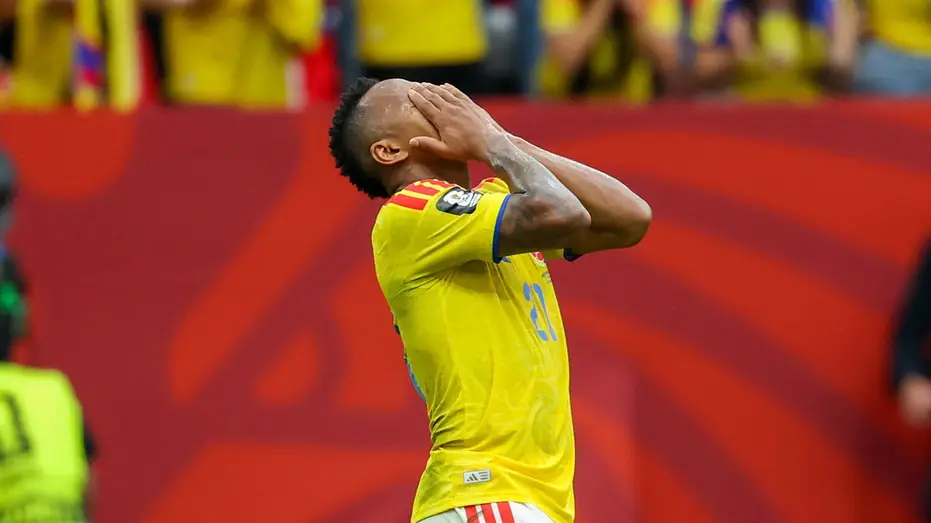
On Instagram, Campaz shared a personal photograph showing him covering his face in visible frustration. His accompanying message appealed for understanding and respect from fans everywhere. The midfielder acknowledged that difficult moments are part of football’s journey.
“Football is also made up of difficult moments,” he wrote. “My Colombia, please let us never lose sight of respect. We may think differently or feel frustration and sadness, but no passion justifies hatred or living in fear.”
Campaz’s words drew a clear line between legitimate sporting frustration and unacceptable hostility. His message reflected both personal vulnerability and strength while addressing the Colombian soccer federation demands investigation as fans processed the situation.
Tournament Continues
Meanwhile, Switzerland prepares for their semifinal clash against Argentina at 9 p.m. ET on Saturday. This crucial matchup promises another compelling chapter in the World Cup tournament narrative.
The federation’s call for expedited investigation signals that those responsible for the threats will face consequences. This case serves as a reminder that Colombian football carries both immense pride and historical responsibility, ensuring that the lessons of Escobar’s tragic fate continue to guide the sport forward.