
Fears grow for Iran’s women’s football team
Fears grow for Iran’s women’s football team
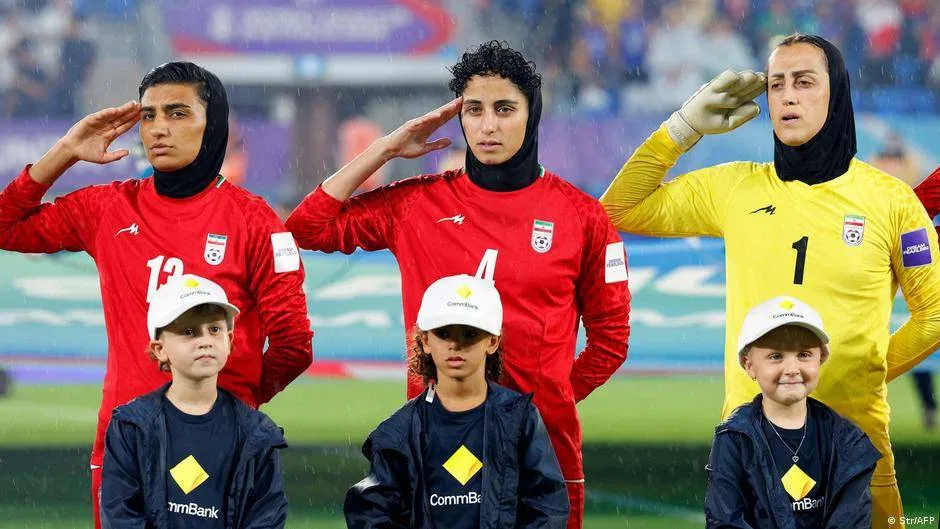
Amid escalating concerns for the safety of Iran’s women’s football squad, demands have intensified for Australia to grant asylum to the five players who reportedly fled the country after their Asian Cup campaign concluded. The team bus, surrounded by hundreds of demonstrators on Sunday, became a focal point for public outcry as supporters chanted “save our girls.” During the confrontation, players were seen signaling for help and capturing images of the crowd outside.
While the team returned to their Gold Coast hotel, further reports emerged on Monday stating that the five had escaped its premises. Zaki Haidari, representing Amnesty International at the scene, noted that the players are now “staying in a hotel under heavy monitoring.” He added that their ability to communicate is limited, complicating efforts by human rights groups, legal advocates, and media to reach out.
“Their communications appear to be restricted, which has made it very difficult for human rights organizations, human rights lawyers and the media to make contact with them,” Haidari said.
FIFPRO Asia/Oceania, the union representing players in the region, echoed similar concerns. Its president, Beau Busch, described the situation as “incredibly concerning,” highlighting the lack of access to the athletes. The recent tensions began after the team faced criticism for not singing the national anthem during their match against South Korea. However, they later complied in their subsequent group-stage games, a shift many believe stems from pressure exerted by the Iranian regime.
Public demonstrations in Australia reflect growing hopes that the players might remain in the country instead of returning to Iran. Yet, with limited public statements from the athletes, their true intentions remain unclear. Iran’s team manager, Marziyeh Jafari, expressed eagerness to return home, stating she “would like to return to my country as soon as possible” to reunite with family and compatriots.
“we are impatiently waiting to return,” Jafari said. “Personally I would like to return to my country as soon as possible and be with my compatriots and family.”
Human rights advocates caution that Jafari’s remarks may have been dictated by the regime. They warn that those opposing the leadership, including Mojtaba, Ali Khamenei’s son, could face severe reprisals. Women, in particular, are at risk, as seen in the case of Navid Afkari, a wrestler executed in 2020 after being accused of murdering a security guard during protests. Similar fates have reportedly befallen other athletes in recent months.
“We are deeply concerned for their safety if they return to Iran,” Haidari said. “They have been labeled ‘wartime traitors’ on national television simply for peacefully expressing their views. In Iran, that kind of public accusation can expose people to serious punishment by the Iranian authorities.”
Exiled former crown prince Reza Pahlavi shared his apprehensions on X, warning that the athletes’ refusal to sing the national anthem during their protest could lead to dire consequences. “As a result of their brave act of civil disobedience in refusing to sing the current regime’s national anthem, they face dire consequences should they return to Iran,” he wrote.
Amnesty International urges the Australian government to “ensure the players have the opportunity to seek asylum if they wish to do so,” citing Australia’s obligation under the UN 1951 Refugee Convention. While the government has expressed solidarity with Iranian women, it has not yet committed to offering asylum. Foreign Minister Penny Wong emphasized support for the team, stating: “We stand in solidarity with the men and women of Iran, and particularly Iranian women and girls.”
“Obviously this is a regime that has brutally cracked down on its people,” Wong told the national broadcaster ABC on Sunday.
Julian Leeser, the opposition Liberal party’s shadow attorney general, urged the Labor government to act decisively, advocating for asylum for players who seek it. “Not turn a blind eye to the danger these women face,” he insisted, underscoring the urgency of the situation.
