
Israel’s war to erase Syria
Israel’s War to Erase Syria
On Tuesday, a stark declaration emerged from Tel Aviv. Israeli Finance Minister Bezalel Smotrich addressed supporters, stating: “The conflict will not end until hundreds of thousands of Gazans depart… and Syria is divided.” His remarks, widely shared on social media, dismantled any lingering illusions. Israel’s campaigns are not driven by “security” or “terrorism.” They are aimed at reshaping the land itself—breaking nations, displacing communities, and rewriting history.
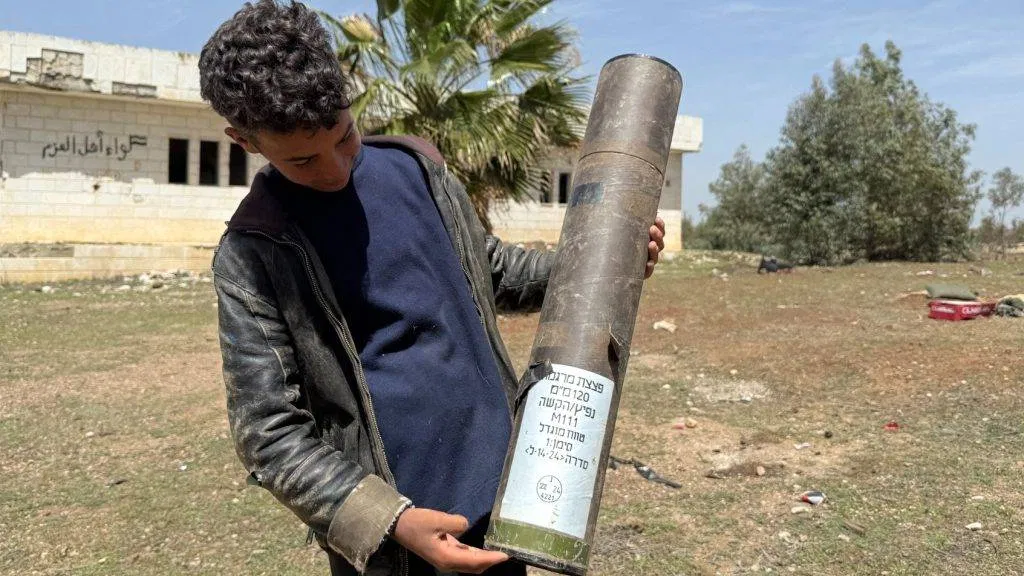
Earlier in April, Israeli warplanes once again pierced Syrian skies, launching a barrage of missiles at military installations and civilian areas. The offensive spanned from central airfields to the southern reaches, where ground operations targeted a settlement near Nawa, resulting in the loss of nine lives.
The Israeli rationale, as usual, centered on “defence” and “pre-emption.” Yet, beneath the surface, the intent was more profound. By striking Nawa, Israel did not just attack a town. It assaulted a hub of Muslim legacy and intellectual tradition. This city birthed Imam al-Nawawi, a revered scholar whose teachings resonate through centuries and continents. His works were crafted in its streets, rejecting the clamor of commerce for the stillness of scholarship. The name of al-Nawawi remains cherished in Cairo to Kuala Lumpur. Bombing Nawa is to strike the root of wisdom.
Nearby, Tell al-Jabiyah stands as a site of ancient significance. It was here that Caliph Omar ibn al-Khattab paused before receiving the keys of Jerusalem, having traveled from Madinah. His meeting with commanders on that hill left an indelible mark on the land of Houran. This ground is sacred—not merely by faith, but by the weight of historical memory.
South and east of this region lie the birthplaces of other great minds. Ibn al-Qayyim al-Jawziyyah, a prominent jurist, hailed from Izraa in Daraa. Ibn Kathir, the renowned historian of Al-Bidaya wal-Nihaya, was born in Majdal, near Bosra. Houran has long been a cradle of scholarship, its soil feeding a civilization that transcended borders and empires.
By the Yarmouk River, this land also saw the decisive battle of Khalid ibn al-Walid in 636 AD against the Byzantines. It was a turning point that reshaped the course of history. To attack this territory is not just to breach sovereignty—it is to challenge the continuity of Arab and Islamic heritage. The ground here is not indifferent. It has borne witness to centuries of defiance, triumph, and renewal.
The Campaign Continues
Since the collapse of the Assad government on 8 December 2024, Israel has intensified its assault on Syrian soil. Dozens of air strikes have obliterated military facilities, air defenses, and arms stores. The stated reason is simple: Israel doubts the new transitional leadership. Yet, the scale and timing of these attacks reveal a more deliberate purpose. Just a day after Assad fled to Moscow, Israeli officials unveiled plans for a “security zone” spanning 400 square kilometers—an expanse larger than the entire Gaza Strip.
Israeli troops now occupy positions along Mount Hermon’s Syrian flank, openly defying international law. While officials initially suggested temporary control, they have since abandoned pretense. “We will stay,” asserted Defense Minister Israel Katz atop the mountain. “We will secure a demilitarized southern region and safeguard the Druze community.”
Thus begins the narrative of minority protection. Israel claims to defend the Druze from perceived threats by the new Syrian leadership. But history reveals the emptiness of these claims. The Druze of Palestine, long enlisted in the Israeli military, have fought for the state they once believed would grant them equality. These are the Galilean Druze, officially Israeli citizens, who answered the nation’s call to service—only to be regarded as second-class within their own homeland.
