
Iran’s strikes on Gulf energy sites rattle markets and raise recession fears
Iran’s Strikes on Gulf Energy Sites Rattle Markets and Raise Recession Fears
Escalating Conflict and Market Disruptions
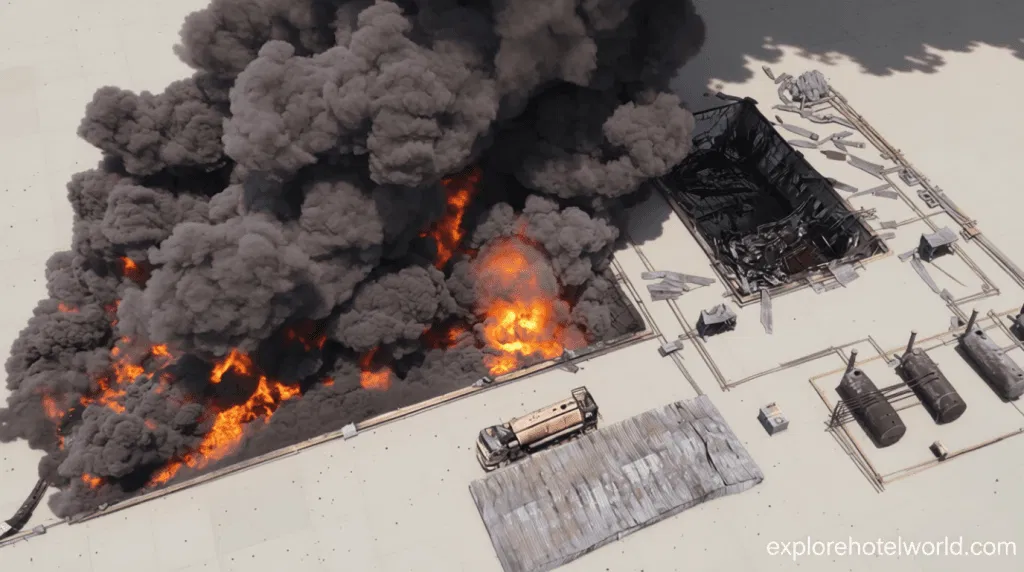
As tensions escalated in the Gulf, Iran’s escalating strikes targeted key energy infrastructure, triggering widespread economic uncertainty. The nation’s attacks, launched in response to a prior U.S.-Israeli military buildup, have destabilized global oil and gas markets, with analysts warning of potential economic fallout. In the wake of the conflict, Tehran’s strikes extended beyond the immediate war zone, impacting critical supply routes and energy hubs.
Recent attacks on the Strait of Hormuz disrupted maritime traffic, grounding over 200 vessels as reported by trade logistics firm Lloyd’s List. This vital chokepoint sees 20% of the world’s oil flow through it, and the disruption has raised concerns about energy security. Meanwhile, Iran’s assaults on Qatar’s LNG facilities in Mesaieed and Ras Laffan Industrial City forced the country to halt production at its top liquefied natural gas plant, sending ripples through international energy trade.
Strategic Uncertainty and Targets
Experts highlight the unpredictable nature of Iran’s campaign, with strikes diversifying from military installations to economic infrastructure. UK Foreign Office analysts noted that while the pace of attacks has eased, the focus remains on energy and industrial assets. This strategy aims to disrupt global supply chains and raise costs for major economies.
“If this war continues for a few weeks, GDP growth around the world will be impacted. Everybody’s energy price is going to go higher. There will be shortages of some products and there will be a chain reaction of factories that cannot supply,” said Qatar’s Energy Minister Saad al-Kaabi in a Financial Times interview.
Dr. Yousef Alshammari, from the London College of Energy Economics, emphasized that a prolonged blockade of the Strait of Hormuz could precipitate a global recession. “As we continue to go towards the summer, I believe the risks of global recession can be amplified,” he warned. “And then I think we can have a political pressure coming particularly from China, which is the major consumer of Iranian oil.”
Former U.S. ambassador to Azerbaijan Matthew Bryza questioned the rationale behind Iran’s attacks. He noted that strikes on Azerbaijan and Turkey, despite its efforts to remain neutral, “don’t make much sense in terms of a coherent, rational military plan.” Bryza highlighted the irony of Iran’s actions, given Azerbaijan’s President Ilham Aliyev had offered condolences to Iran after the war began, even pledging aid without financial compensation.
Global Market Dynamics and Price Trends
Despite rising energy prices, Alshammari pointed out that the surge has been less severe than anticipated. “That is due mainly to the fact that we are in a period of low demand, and secondly, due to the fact that the global oil markets continue to be well supplied,” he explained. Analysts caution that the conflict’s economic consequences may intensify as summer approaches, with potential ripple effects on global trade and political alliances.
