
The US and Iran are at war three months before the World Cup kicks off. It’s unclear if the Iranian team will play.
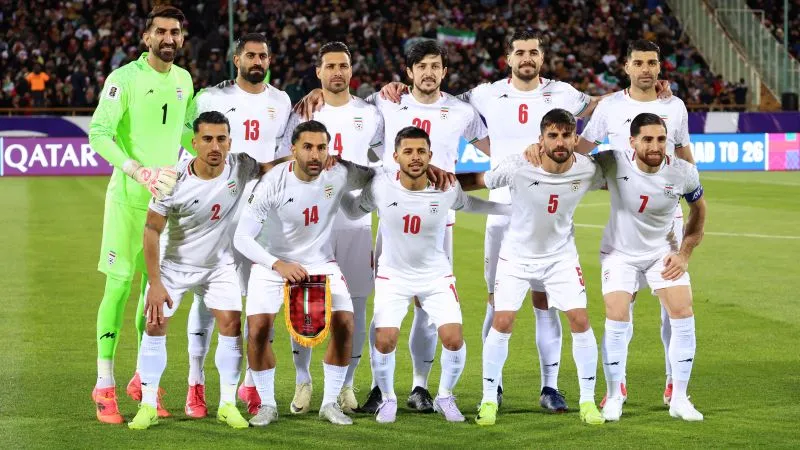
The US and Iran are at war three months before the World Cup kicks off. It’s unclear if the Iranian team will play.
Three months have passed since the FIFA World Cup’s commencement in North America was announced, yet the escalating conflict in the Middle East has introduced fresh uncertainties about Iran’s participation. The tournament, already a subject of controversy, now faces questions over whether the Islamic Republic will field its team after entering a state of war with one of the host nations. As tensions mount from strikes by the United States and Israel, the country’s leadership remains under threat, casting doubt on its ability to commit to the competition.
With the supreme leader, Ayatollah Ali Khamenei, recently killed, a power vacuum has emerged, complicating decisions about potential withdrawal. The uncertainty surrounding the next leader’s stance toward the US makes it difficult to predict how the national soccer team will proceed. Meanwhile, the Federation’s president, Mehdi Taj, has voiced skepticism about continuing with the tournament.
“What is certain is that after this attack, we cannot be expected to look forward to the World Cup with hope,” Taj stated to Varzesh3, as reported by the Associated Press.
FIFA’s general secretary, Mattias Grafstrom, acknowledged the situation but emphasized the organization’s focus on ensuring a safe event. “It’s a bit premature to comment on that in detail, but of course we’ll monitor the developments around all issues around the world,” Grafstrom said following an International Football Association Board meeting in Wales. “Our priority is to have everyone participate in the World Cup.”
Travel restrictions imposed by the Trump administration last year have already limited Iranian supporters’ access to the US. This means many fans will miss watching their team’s matches in California and Seattle. Although athletes and coaches are exempt, Iran threatened to boycott the draw in Washington, DC, when delegation members were denied visas. A small group, including the head coach, attended the event, but the tension highlighted by the recent conflict has deepened concerns.
Iran is scheduled to face New Zealand, Egypt, and Belgium in the group stage. The World Cup, set to span from June 11 to July 19 across Mexico, the United States, and Canada, will feature 48 teams. However, the Middle East turmoil has already disrupted the sports calendar. The Qatar Football Association (QFA) announced indefinite postponements of its tournaments and matches, citing the need for safety amid recent Iranian airstrikes targeting Doha.
Additionally, air travel restrictions have caused logistical challenges for teams heading to Australia for the Formula 1 season’s opening race in Melbourne on March 8. Many rely on Doha and Dubai as transit hubs, but the ongoing disruptions have thrown plans into disarray. As events unfold rapidly, the fate of the Iranian squad remains in question, with the World Cup’s start looming closer.
