Socialist Surge: Mamdani Challenges Democratic Party Establishment in Bold Move
Socialist Surge – One year since his shocking mayoral win in New York City, Zohran Mamdani continues to reshape political dynamics within the Democratic Party. The young mayor, a prominent democratic socialist, is now leveraging his growing influence to challenge entrenched leaders, signaling a shift in the party’s internal power structure. His recent efforts have drawn attention from both supporters and critics, as he aims to redefine the progressive agenda and influence upcoming elections.
Mamdani’s Strategic Alliance with Sanders
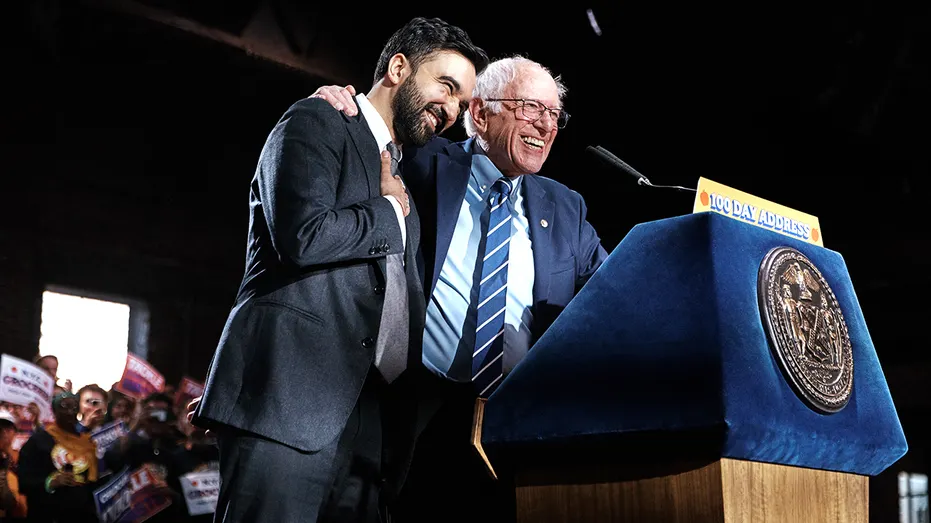
At a high-profile get-out-the-vote event in Brooklyn on Thursday, Mamdani joined forces with Senator Bernie Sanders, the Vermont Democrat and two-time presidential nominee. The rally, held just days before critical primary races, underscores their shared vision for a more radicalized Democratic Party. Sanders, who has long championed progressive causes, praised Mamdani’s leadership, emphasizing that their collaboration is essential for advancing bold policies.
“Now more than ever, we need leaders in Congress who understand firsthand the struggles working people face,” Sanders stated on social media, highlighting the alignment of their goals.
Mamdani’s endorsement of a slate of candidates is part of a broader strategy to amplify progressive voices. Among his key allies are figures like Darializa Avila Chevalier, a political organizer running against Rep. Adriano Espaillat in New York’s 13th U.S. House District. Espaillat, currently chair of the Congressional Hispanic Caucus, has faced strong support from party leaders, including Governor Kathy Hochul. Mamdani’s backing of Chevalier represents a direct challenge to this establishment influence.
Another focal point of his campaign is Brad Lander, a former New York City Comptroller who previously contested the mayoral race. Though they were rivals in 2023, Lander has since become a staunch supporter of Mamdani. The pair is now uniting to oppose Rep. Dan Goldman in the 10th Congressional District, which spans lower Manhattan and parts of Brooklyn. Goldman, a long-standing Democratic representative, finds his campaign under pressure from former House Speaker Nancy Pelosi’s backers.
Meanwhile, in New York’s 7th Congressional District, Mamdani’s endorsement of socialist state Assembly Member Claire Valdez adds to the growing momentum. Valdez is challenging Brooklyn Borough President Antonio Reynoso, a figure backed by retiring Rep. Nydia Velazquez, D-N.Y. These races, which Mamdani is actively supporting, are seen as a test of his ability to translate grassroots support into electoral success.
Political Power and Public Perception
As the city’s youngest mayor, Mamdani’s political acumen has been a subject of discussion. While he has long been a favorite among left-wing activists, his growing clout has also attracted attention from former skeptics. In fact, President Donald Trump recently praised the mayor, a departure from his earlier criticisms. Trump once called Mamdani a “communist lunatic,” but during an Oval Office meeting in November, he acknowledged the mayor-elect’s rationality and capability.
“It’s crystal clear that Mamdani understands power and how to leverage it,” said Joe Caiazzo, a seasoned Democratic strategist. “He remains incredibly popular, and it appears he also understands that may not always be the case. That’s why I think you see him flexing his political muscle now. It’s smart politics,” Caiazzo added, reflecting on Mamdani’s calculated moves.
Mamdani’s influence is not limited to local politics. His platform, centered on affordability and housing costs, has become a rallying cry for voters across New York. The mayor’s recent emphasis on these issues has resonated with working-class communities, a demographic traditionally underserved by party elites. His support for candidates in state legislative races further solidifies this focus, creating a cohesive narrative that challenges the status quo.
Republican Opposition and Midterm Implications
For Republicans, Mamdani’s rise presents a new opportunity to undermine Democratic unity. His socialist leanings, which some view as a radical departure from traditional party values, have been weaponized by opponents. The National Republican Congressional Committee (NRCC) has framed Mamdani as a symbol of Democratic extremism, using his image to highlight perceived policy risks.
“Zohran Mamdani’s socialist brand is as toxic as it comes,” NRCC National Press Secretary Mike Marinella told Fox News Digital. “And during a time when Democrats don’t have a leader or a message, he’s exactly the kind of bogeyman we can use against them to truly show who is leading their party and the crazy policies they all support.”
Despite these attacks, Mamdani’s popularity within the Democratic base remains strong. His ability to mobilize voters and rally support for progressive candidates suggests a new era of intra-party competition. The outcomes of the races he has endorsed will be closely watched, as they could determine whether his political momentum translates into tangible gains for the party.
Mamdani’s approach also reflects a broader trend in New York politics. As the city’s most populous and politically diverse metropolis, New York has become a testing ground for progressive ideas. His mayoral campaign, which initially disrupted the Democratic establishment, now serves as a blueprint for other candidates seeking to challenge the party’s traditional power brokers. This dynamic is reshaping the Democratic landscape, with young leaders like Mamdani pushing for a more activist-oriented platform.
His alliance with Sanders, a figure who has consistently advocated for sweeping social reforms, further cements this shift. The senator’s presence at Mamdani’s rallies adds credibility to the mayor’s efforts, demonstrating a bridge between local and national progressive movements. This partnership could influence the broader Democratic strategy, particularly as the party prepares for midterms where maintaining control of the House is crucial.
With the upcoming primary elections, Mamdani’s role as a political catalyst is more significant than ever. His ability to mobilize voters and unify disparate progressive factions highlights the evolving nature of party politics. While some within the Democratic establishment may resist his influence, the mayor’s growing power indicates a fundamental change in the party’s direction. This shift, however, also invites scrutiny from opponents who see his socialist policies as a threat to the party’s traditional base.
As Mamdani continues to assert his dominance, the question remains: can his grassroots appeal overcome the challenges posed by party elites and Republican attacks? The answer may lie in the upcoming races, where his support could either solidify his legacy or expose vulnerabilities in the Democratic Party’s structure. Regardless of the outcome, his actions have already left an indelible mark on the political landscape, signaling a bold new chapter for progressive activism in New York and beyond.
For now, Mamdani’s focus remains on galvanizing voters and ensuring his endorsed candidates succeed. His recent social media post, which emphasized the importance of collective effort, underscores his commitment to this goal. “This is the team. This is our year. It’s up to all of us to get them over the finish line,” he wrote, framing the current moment as a critical juncture for the party’s future.
The Democratic establishment, once perceived as unyielding, is now facing a formidable challenge from the left. With Mamdani’s growing influence, the party’s traditional leaders may need to adapt or risk losing control of their own narrative. This evolving power struggle is not just a local phenomenon but a national one, as the mayor’s actions could influence broader Democratic strategies in upcoming elections.